Why so little investment in biomass and biogas
The village with a powerplant proves why the exclusive bet on wind and solar was wrong
Here's where the next renewables investment opportunity might come from
 Cristian Matache
from
Bucharest
about
Arad
At the end of a 35-year cycle during which more than 50 Romanian towns shut down their coal-fired power plants, a village of 3,000 souls is firing one up. It's a modest affair, as befits a commune of its size – just 1 MW of electric power and another 3 MW of thermal output – but enough to share with its bigger neighbors too.
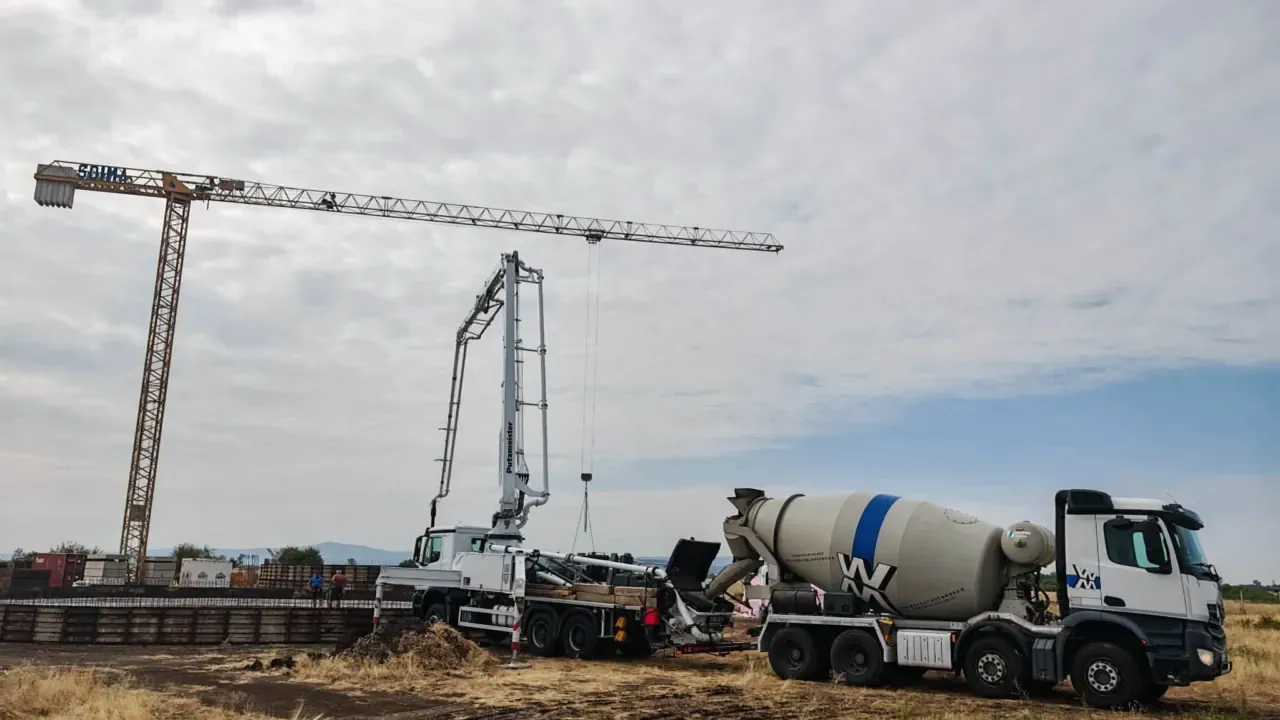
The plant is slated to go online next year, running on biogas and biomass – one of the most overlooked renewable resources in Romania. The capacity itself looks like a drop in the ocean. But do the math: if each of Romania's nearly 3,000 communes had a plant like this, the country would be unrecognizable.
We're talking annual power output greater than that of the Cernavodă nuclear plant, tens of thousands of new jobs, and a chance to put agricultural byproducts – often written off today as waste – to good use. Enough money flowing through the economy to bump up GDP by a few percentage points and chip away at a budget deficit that's spiraled out of control in Bucharest.
Granted, it isn't cheap – partly because there are no local integrators around to optimize and scale down costs – but it isn't dramatically pricier than other renewables either. The investment comes to €8.6 million, secured through an EU-funded project. The crucial caveat: this model only pays off if there's a use for the heat it generates – whether for residential heating, greenhouses, or the food industry.
"The biogas and biomass plant is the biggest investment our commune has ever made. It's a huge project for a small commune of 3,000 people. The thermal agent we produce can heat the whole commune of Seleuș, plus the towns of Ineu and Pâncota. We're 60-70% of the way there, and the equipment has already arrived from Italy," says mayor Cristian Branc.
Where's the catch
So why is Seleuș the exception rather than the rule? Today's renewable energy battle is being fought by heavyweights: wind and solar, each supplying roughly 10% of the country's power needs – but often at precisely the wrong hours. Caught in the crossfire is biogas, which can generate electricity exactly when it's needed, no batteries or other workarounds required.
Here's the thing: the subsidy that existed until about a decade ago was scrapped once wind power took off, and it was never reinstated when solar arrived to help balance things out.
Two decades ago, Romania's wind energy boom kicked off, fueled by subsidies tacked onto consumer bills. Within a few years, nighttime-heavy production had thrown the grid off balance. With a total investment estimated at €7 billion, wind now delivers 6TWh – just over a tenth of the country's total output.
A decade ago, the solar boom began, aided by the sharp drop in panel prices and the lifting of restrictions on Chinese imports. Daytime generation helped partially rebalance the grid and even paved the way for a second wind energy boom. Total investment here is nearing €10 billion, with annual output of 5TWh – just under a tenth of the total.
Biogas and biomethane got caught right in the middle. The subsidy was axed and never came back. A handful of players – mostly farmers – went ahead and invested anyway, on their own dime and at their own risk, or through one-off grants. Today, Romania's biogas capacity adds up to roughly 22 MW across 30 production units. Others prefer to take it a step further, converting biogas into biomethane and injecting it straight into the natural gas grid.
That, for now, appears to be where the real opportunity lies for the years ahead, according to MOL in a regional comparative study cited by Financial Intelligence. The gap with the rest of Europe is stark. The continent had nearly 2,000 biomethane facilities as of Q2 2026, according to data cited in the market report, while Germany alone counts over 20,000 biogas stations. Romania has agricultural resources on par with some of the continent's major markets, yet it has built far fewer installations.
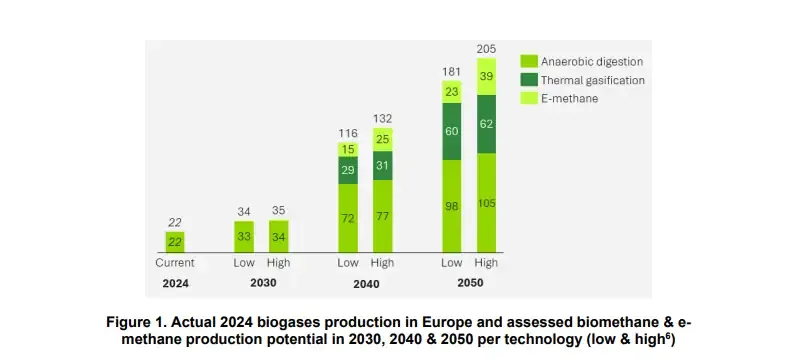
The presentation, based on European Biogas Association data, estimates Romania could produce up to 8 billion cubic meters of biomethane annually by 2050 – enough to put it in second place in Central and Eastern Europe, behind Poland. Romania's national energy strategy points to the same order of magnitude.
The lay of the land
Romania has farms, crop residues, and organic waste in abundance. It also needs reliable energy. The link between these two realities is starting to attract investment, even though the sector is still in its infancy. Biogas can be produced around the clock, as long as the facility keeps getting fed raw material and runs within its designed parameters. Electricity can be dispatched during peak hours, while the heat can serve the farm itself or a local network. Once purified, biogas becomes biomethane, which can be fed into the gas grid provided it meets technical standards.
Location matters too. A facility can be built next to a farm, a food processing plant, or a source of biodegradable waste. Distributed production can ease pressure on parts of the grid and make local use of heat that would otherwise go to waste.
The broader energy context is making this flexibility increasingly valuable. Under its National Recovery and Resilience Plan (PNRR) commitments, Romania pledged to shut down 710 MW of coal capacity by August 31, 2026. On August 28, however, the government decided to temporarily extend the operation of several units at Craiova and Turceni, citing severe drought, high temperatures, peak-hour demand, and lower-than-expected forecasts for wind and solar output. The Craiova units are now set to keep running until the end of Q2 2027, while the Turceni 5 unit will stay online until the end of Q1 2028.
As for the regulatory timeline, Romania now has a legislative framework for producing, injecting, and trading biomethane, introduced through Emergency Ordinance 9 of February 27, 2026. The target: biomethane should make up at least 5% of gas transported and distributed by 2030. The first large-scale commercial projects are in the pipeline, with some slated to start operating in 2027-2028.
Crunching the numbers
The biogas economy starts with a very small unit: the farm animal. Teodor Vintilă, a professor at the University of Life Sciences in Timișoara, estimates that manure from three cows can produce roughly 2,000 cubic meters of biogas a year.
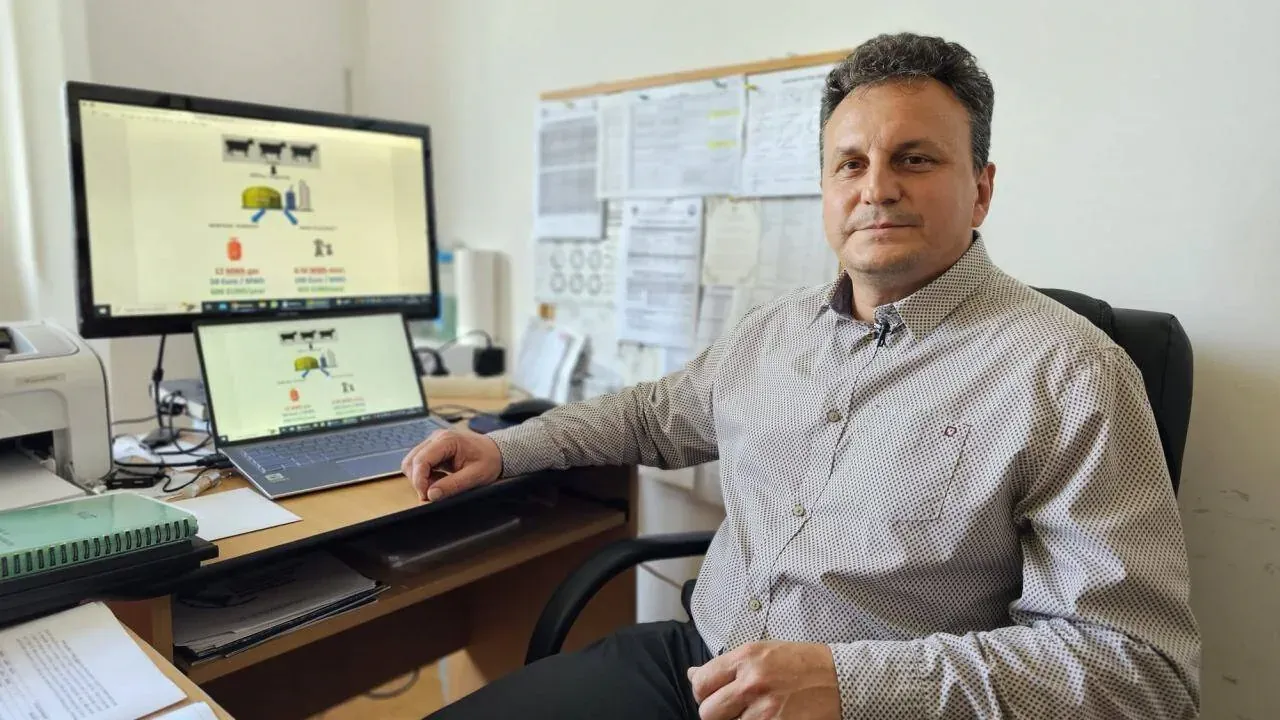
"That biogas can be converted in cogeneration units into electric and thermal energy. The gas is burned in a thermal engine, which spins a generator. The electricity produced through this technology comes out to around 4.56 megawatt-hours. If we sell that electricity at €100 per megawatt-hour – roughly today's market price – those three cows alone can bring in around €456 a year," Professor Vintilă explained to Agrointeligența.
If the gas is purified into biomethane, the energy content can reach about 12 MWh, worth roughly €600 at a price of €50/MWh. These are ballpark figures, sensitive to the technology's efficiency, gas composition, and actual sale prices.
On a farm with thousands of animals, the volumes start to add up fast. What's more, the digestate left over after fermentation can be used as fertilizer, depending on its properties and applicable regulations. That way, some nutrients return to the soil, and farmers can cut back on purchased fertilizer.
Biogas investments
Biogas can scale to fit different sizes of operation. A farm might produce it mainly for its own use, while a larger facility can feed the grid and serve multiple suppliers of organic material.
In Pașcani, Agrocomplex Lunca completed a nearly €4.5 million facility in 2026, partly financed with €2.98 million through the PNRR. The plant is designed to process roughly 10,000 tons of animal manure and 2,000 tons of plant waste a year, with a maximum capacity of 630 kW.
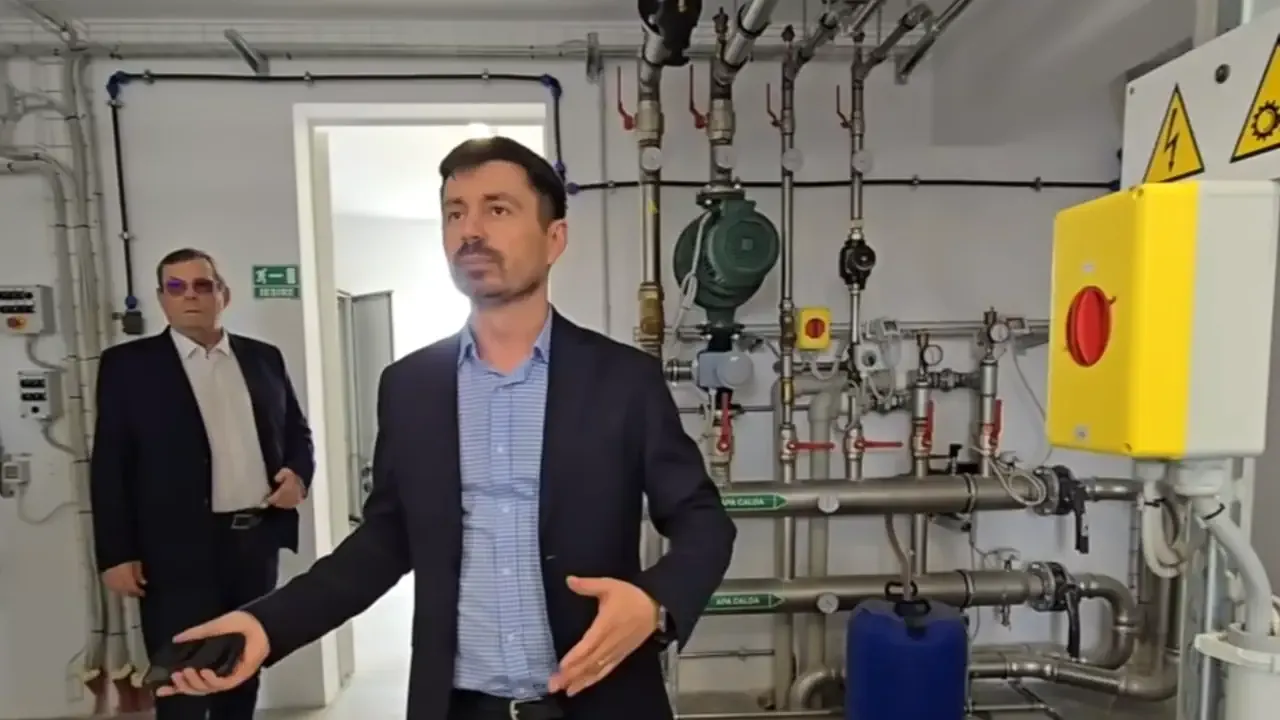
"Part of it will be used on-farm, and we'll feed the rest into the grid," CEO Bogdan Pantazi explained during the testing phase for energy delivery. Under this model, the farm covers part of its own energy needs while the surplus becomes a revenue stream.
The PNRR has backed other similar projects too. Ziarul Financiar reports that six manure-based biogas projects were selected for funding, worth a combined 100 million lei. Among the projects mentioned is one from Panifcom, with a planned capacity of 1,000 kW and an annual need of up to 20,000 tons of manure, supplemented with plant matter.
Biomethane investments
The far more scalable opportunity lies in biomethane – purified gas with properties compatible with uses that require natural-gas-grade quality.
In Alba County, DN AGRAR and BSOG Energy are developing a facility estimated at around €30 million. The project has an initial planned capacity of up to 15 MW, with room to expand beyond 20 MW. DN AGRAR would supply the raw material under a 15-year contract and estimates annual revenue of about €3.5 million from the deal.
The project's timeline has slipped. Back in 2025, the companies expected a final investment decision in the first half of 2026, with operations potentially starting in 2028. According to the latest project documentation, the final decision is now expected in 2027. So for now, the facility remains a project in the works, with its timeline hinging on approvals and final development terms.
In Constanța County, BSOG Energy and Unigrains Trading have announced a second project worth over €65 million. It targets production of 57 MW of biomethane and more than 250,000 tons of organic fertilizer a year. Pairing gas with fertilizer production could make better use of organic matter and create two revenue streams from a single operation.
Romgaz, for its part, has penciled in €250 million for 100 MW of biomethane capacity by 2050, under its own strategy. The company's roadmap calls for €115 million between 2030-2040 and €135 million in the following decade.
Meanwhile, Delgaz Grid is testing the technical conditions for injecting biomethane into the gas network through its BioMethaneMix pilot project, with completion expected in 2027. These are necessary steps toward building a market where producers can deliver gas, operators can receive it, and consumers can buy it.
Why it's complicated
If resources are so abundant, why have so few plants been built? Part of the answer lies in the financial scars of early investors.
Mihai Schita's plant in Ardud cost roughly €6 million. The farmer says that over seven years, he racked up losses comparable to the original investment. "Every single year, we were in the red," he told Agrointeligența.
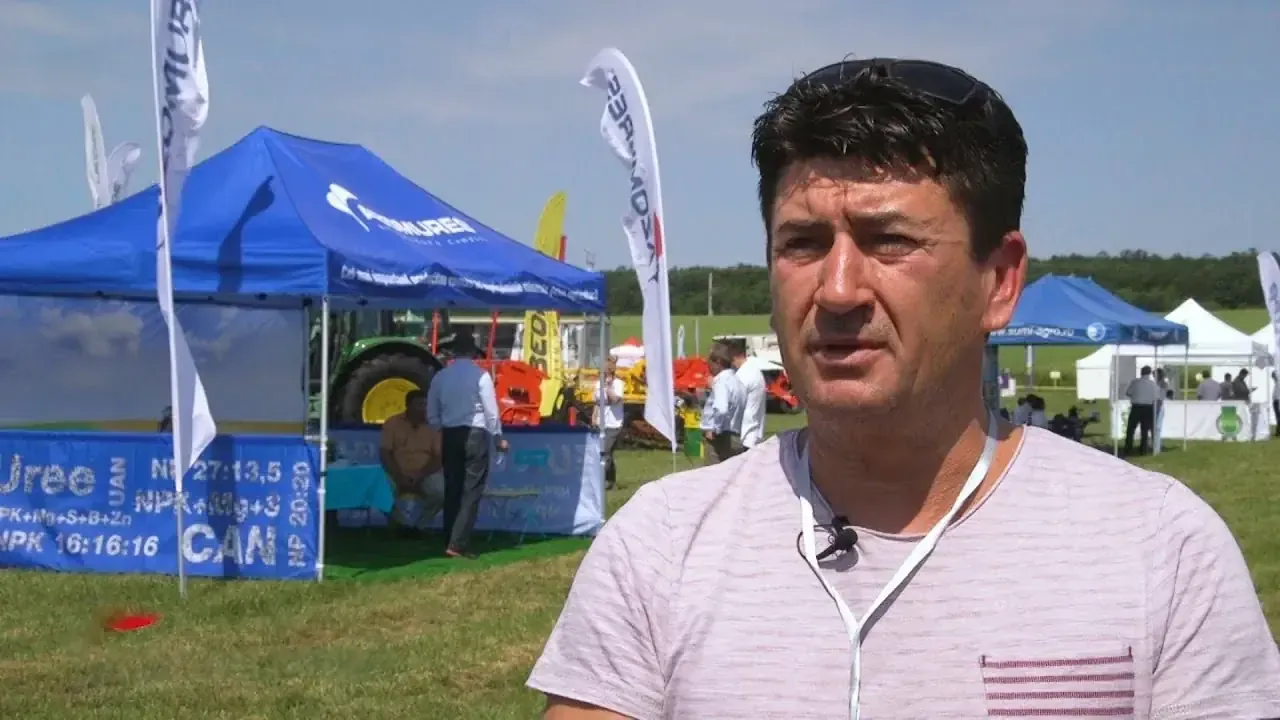
According to Schita, changes to the green certificate scheme between 2013 and 2014 seriously upended producers' financial projections. Mid-development, support was cut, and the rules for awarding certificates were rewritten. Investments were left saddled with high costs and lower-than-expected returns.
Biogas is a round-the-clock operation. Raw material needs to be collected and fed into the system regularly, equipment needs constant monitoring, and engines and treatment systems require upkeep. Schita estimates maintenance can eat up around 40% of revenue at a biogas plant, compared to roughly 10% for a solar installation. The exact figures vary project by project, but the gap in complexity is real.
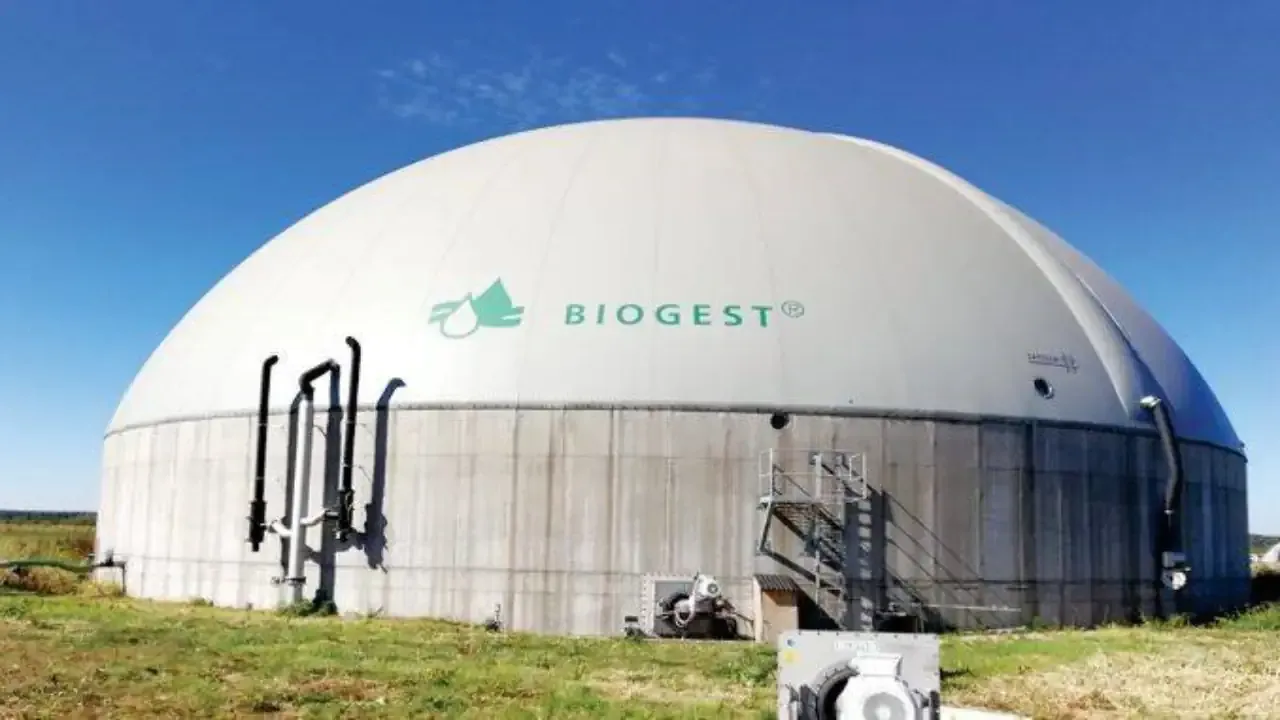
Operationally, a biogas plant looks a lot like a small processing factory. It needs staff, logistics, technical oversight, and a steady supply chain. Investors need to be able to pencil in these costs over the long haul.
That's exactly why regulatory stability matters so much. An investment that pays off over many years depends on confidence that support mechanisms, tariffs, and market access rules won't be upended after the capital's already been spent.
A lesson from Czechia
Czechia offers a useful model. Its biomethane action plan aims to convert a significant share of existing biogas installations into biomethane units, backed by interim targets and support mechanisms. That kind of approach gives investors a clear outlook and helps them gauge future demand.
Romania needs that same alignment between targets, funding, and buyers. If producers have to shoulder high costs to purify and inject gas, the market needs to offer commercial terms that justify the expense. A target set for 2030 only gains real economic weight when it's backed by clear rules and long-term contracts.
From waste to strategic resource
Romania finds itself at a promising moment for biogas and biomethane development. It has a large agricultural base, the first commercial biomethane projects underway, EU funding for new facilities, and a legislative framework that's starting to shape the market.
The challenge now is tying it all together. Farmers need stable contracts for their raw material, investors need predictability, and the grid needs to be able to absorb the gas that's produced. At the same time, facilities need to be designed to make the most of electricity, heat, and digestate alike, wherever demand exists.
The shutdown of coal plants makes this development all the more urgent. Biogas can provide dispatchable, on-demand power, cut reliance on fossil fuels, and turn agricultural waste into farm income. Each individual plant makes only a modest contribution – but a well-planned network of them could become a genuinely useful piece of the energy puzzle.