What is Europe's largest solar farm
Thrifty Romanians saved enough to fund a small green revolution
A 20 billion euro renewables segment is preparing to sort through investors
 Cristian Matache
from
Bucharest
about
Arad
 Lucian Davidescu
In the draught-scorched farmlands of Western Romania near Arad, a plot stretching over a thousand hectares is about to host what will become the European Union’s largest onshore solar farm. Known as Dama Solar, the gigawatt-scale development carries a price tag of more than half a billion euros. The 1.3 GW facility would yield 1.8 TWh yearly, which adds 36% to current Romanian 5TWh solar output.
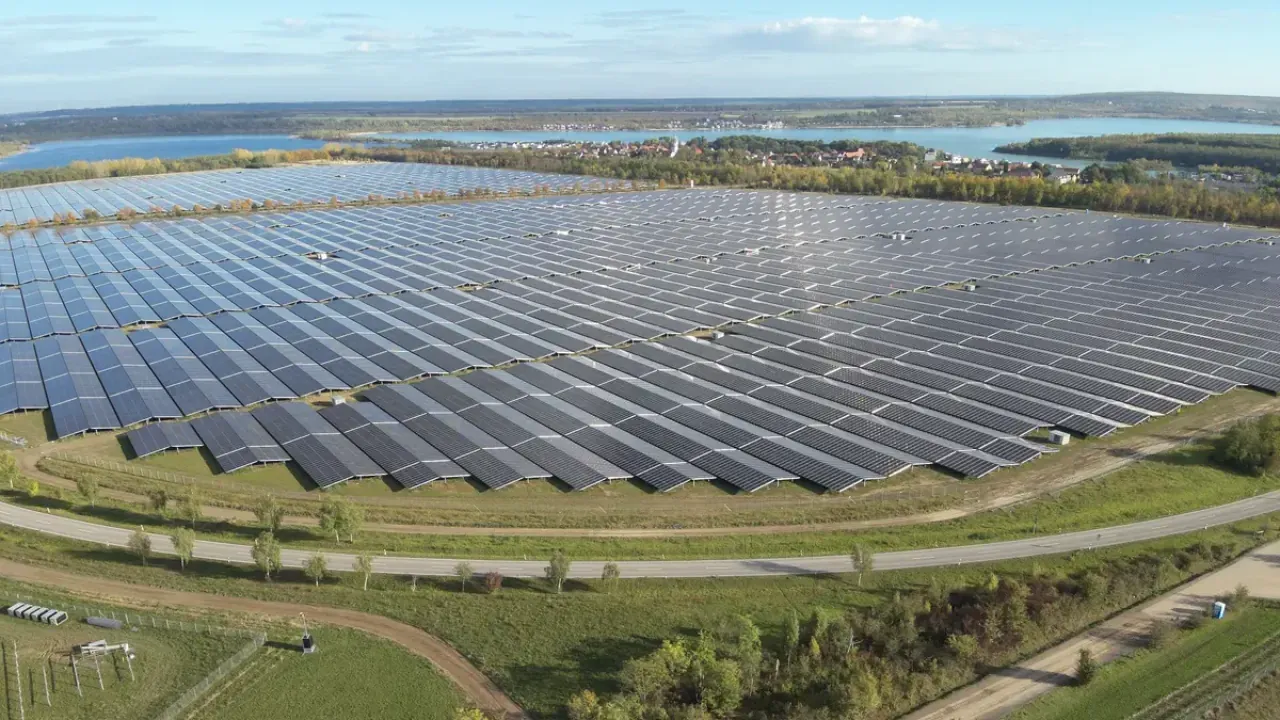
It's double the size of the current holder of the title, Witznitz Solar Park in Germany, pictured above.
Yet the most compelling story unfolding across these fields is less about photovoltaic panels and more about the financial muscle plowing them into the ground. Romanian banks manage 130 billion euros in resident savings and only 90 billion euros in loans, and – aside from financing the budget deficit – this type of investment is one of the few scalable options for the surplus.
A decade ago, a project of this magnitude in South-Eastern Europe would have collapsed under its own weight or withered in policy limbo. Today, it has secured a debt package underwritten by a syndicate of 14 international and commercial lenders, moving straight into construction.
Arad is the flagship of a broader structural shift. Across Romania, the defining bottleneck for clean energy has migrated from developer ambition to financial execution. Large-scale energy projects – once boutique investments dependent purely on state subsidies – are becoming the core asset class for major banking syndicates.
In the first eight months of 2026 alone, more than 2.5 GW of new generation and storage capacity plugged into the grid. Solar led the charge, wind followed, and battery systems finally started arriving in volume. Grid operator Transelectrica expects another couple of gigawatts before the year is out.
Even OMV Petrom, Romania's main fossil fuel producer and refiner, is also relentessly pursuing renewables. „At OMV Petrom, our goal for 2030 is to have over 2.5 GW of installed capacity in renewable energy projects together with our partners. We have built a portfolio of solar, wind, and hydro projects that give us the options needed to reach this target," declared Franck Neel, member of the OMV Petrom Executive Board responsible for Gas & Power.
The long way from paper to reality
Look closer at the paperwork and the scale becomes almost absurd. At mid-year, more than a thousand projects with valid grid-connection permits totaled over 100 GW of approved capacity. Roughly half of that already had signed connection contracts. A smaller but still formidable slice—more than 10 GW across a couple of hundred projects—had construction permits and operating licenses in hand. Operators expect several of those gigawatts to come online this year and next.
For years, Romania’s green energy landscape suffered from a sharp discrepancy between intent and execution. Permits were granted by the thousands, creating paper pipelines running into tens of gigawatts, but actual grid connections lagged far behind. What has transformed speculative pipeline drawings into steel and glass is the evolution of project finance.
Commercial banks and international financial institutions have moved from cautious observers to aggressive enablers. Management consultancy McKinsey estimates that funding Romania’s energy transition represents a €20 billion debt opportunity for banks alone. As public subsidies narrow their scope, commercial balance sheets are stepping up to fill the void, but until now only a small fraction was covered.
„In the last six years, we have tripled BCR's financing in the energy sector, based on the premise that energy is the infrastructure on which Romania's competitiveness depends. The approximately 3 GW within BCR's financing structures show us that Romania is transitioning from intention to construction” says Bogdan Cernescu, Corporate Banking Director at BCR.
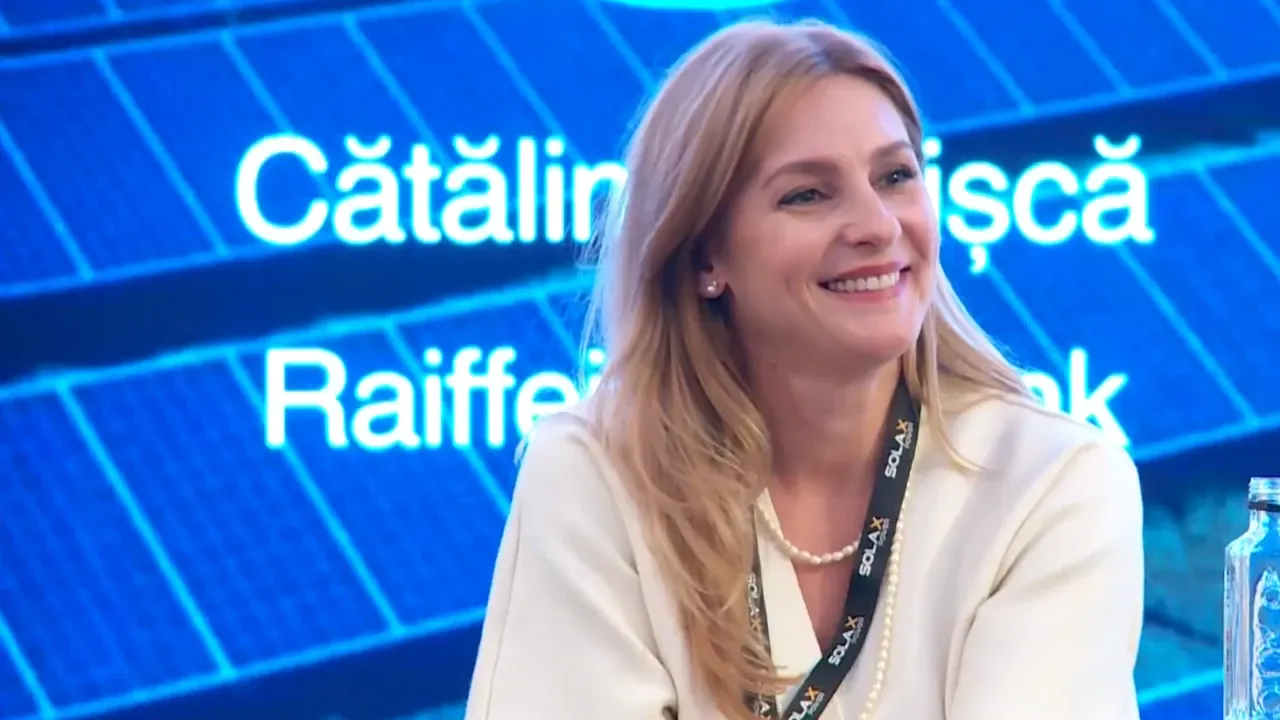
The shift is even more evident in the words of Manuela Trisnevschi, Head of Energy and Utilities: „Six years ago, we predominantly financed oil and gas. Today, 2 out of every 3 MW we finance are wind energy, and nearly 1 in 5 MW is storage capacity – exactly what the system needs to function”.
Other examples
Building projects at scale requires complex financial architecture. Today’s mega-developments rely on sophisticated layering: anchor investments from multilateral institutions like the European Investment Bank (EIB) and the European Bank for Reconstruction and Development (EBRD), backed by EU guarantees such as InvestEU, combined with commercial debt from regional lenders.
Crucially, these financial syndicates are de-risking projects by pioneering hybrid revenue models. Rather than relying solely on volatile spot market prices, developers are securing multi-year Contracts for Difference (CfDs) alongside long-term corporate Power Purchase Agreements (PPAs).
Take Econergy’s Părău 2 project in Brașov county as an example. It blends hundreds of megawatts of solar capacity with substantial battery storage, backed by a debt package assembled by a consortium consisting of EBRD, Black Sea Trade and Development Bank, OTP Bank and Exim Banca Românească. Similarly, Scatec’s Urleasca wind project in Brăila and Rezolv Energy’s VIFOR wind park in Buzău demonstrate how multi-bank syndicates are routinely marshalling hundreds of millions of euros to build out multi-phase projects. Lenders are insisting on battery storage integration to protect their balance sheets against price cannibalization and grid congestion.
This brings us back to the fields of Arad. As Rezolv Energy – backed by global infrastructure investors Actis and Mubadala – prepares to break ground on Dama Solar, the project serves as a proving ground for this new era of high-finance renewables. The project’s sheer scale requires a banking consortium that reads like a registry of European high finance. Fourteen institutions, ranging from Siemens Bank and UniCredit to local commercial banks and multilateral development funds, have lined up to provide over half a billion euros in green loan financing.
None of this happens without strain. The transmission and distribution networks were not designed for this volume of intermittent power arriving this fast. Transelectrica’s ten-year investment plan runs into the billions of euros for good reason. And the distance between a valid grid permit and a spinning turbine remains long. Of the more than 100 GW theoretically approved, only a fraction has reached the advanced permitting stage that banks actually fund. Developers still talk of pipelines measured in multiple gigawatts (Eurowind alone claims 7.5 GW in various stages) yet the conversion rate from paper to power will decide whether Romania becomes a regional clean-energy powerhouse or merely another country with impressive PowerPoints.
An editor's disclaimer becomes warranted at this point
There is good reason for which this article is not written on-premises, like such an investment would warrant: there's nothing to write home about yet. Not even meaningful concerns of the community, at least according to the Livelihood Restoration Plan by Mott MacDonald consultants.
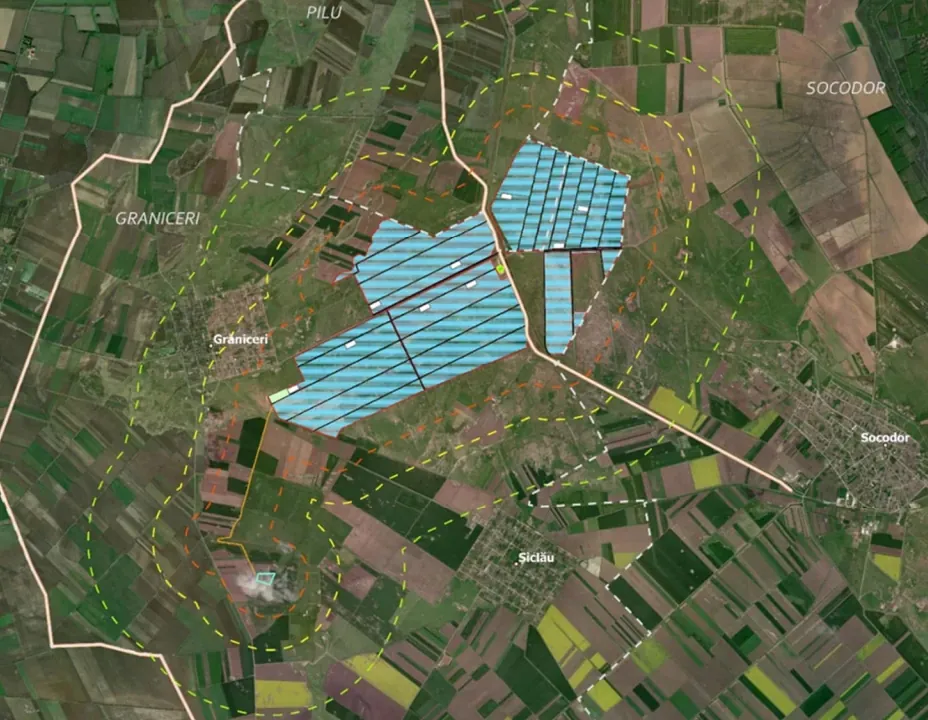
For the same reason, we didn't use the solar-panel stock photos that usually come with such news: there's nothing to show for right now.
And, finally, it's also why we're listing it under ”Say when” (forecasts) rather than ”How come” (analysis) or ”What's up” (features).
Countless ventures, more-or-less reliable, were announced but never built. The Arad project will likely get done but may still fail for one reason or another. The underlying mechanics that make it possible are here, worth talking about, but it's only when we're there on the ground – watching the panels shine in the sun – that we'll report it as fact.