ReportageWhich is the poorest country in Europe
The race from the bottom: Moldova's BET to catch up with Albania
Speeding on a bumpy road, Moldovans hope to make it to the EU in one piece
 Lucian Davidescu
in Chisinau
“Moldova is the poorest country in Europe... we did it! But some years it's Albania. It's very competitive”. This sounds like stand-up comedy because that's literally what it is; and still it doesn't come from some economist or political figure, although it's spot on factual. The line is from one of the routines of Moldovan-born comedian Valeria Vulpe, a former data-scientist for Google and and quant* for Deutsche Bank, who now draws endless accolades lately for her deadpan, witty, highbrow humor.
*quantitative analyst, the finance counterpart to a rocket scientist... and since we're here – mind you, there's a Romanian version to this article as well.
This sort of absurd, sarcastic take on poverty is a staple of Moldovan culture. “We didn't have an air-conditioner. We couldn't even afford to turn the pillow over, to enjoy the cool side. This one-sided pillow is both uncomfortable and a mathematical paradox. You know you're poor if your bedding is a Möbius strip... Not everybody gets that. But everybody can't get everything. We tried that, in the Soviet Union”, the routine goes on.

Ms. Vulpe might just be the world’s most famous person from Moldova right now, if only among Facebook and Youtube shorts doomscrollers. She's also one of the million Moldovans who left the country for a better life, bringing migration to over 30%, again fighting Albanians and Bosnians for the top spot at the wrong end.
A thorough factchecker may not fully agree with the comedian's wording: in actual fact, Albania's economy really took off in recent years and dusted Moldova in terms of GDP per capita: 12,500 € vs 9,500€.
But all else is not equal
Ambitions in Moldova seem to be even higher than Albania's right now. For example, as both countries closed down their stock exchanges a while ago for lack of activity, only Moldova is starting it back again. The Bucharest Stock Exchange helped clone a scaled-down local offshoot to serve as Moldova International Exchange (BIMx).
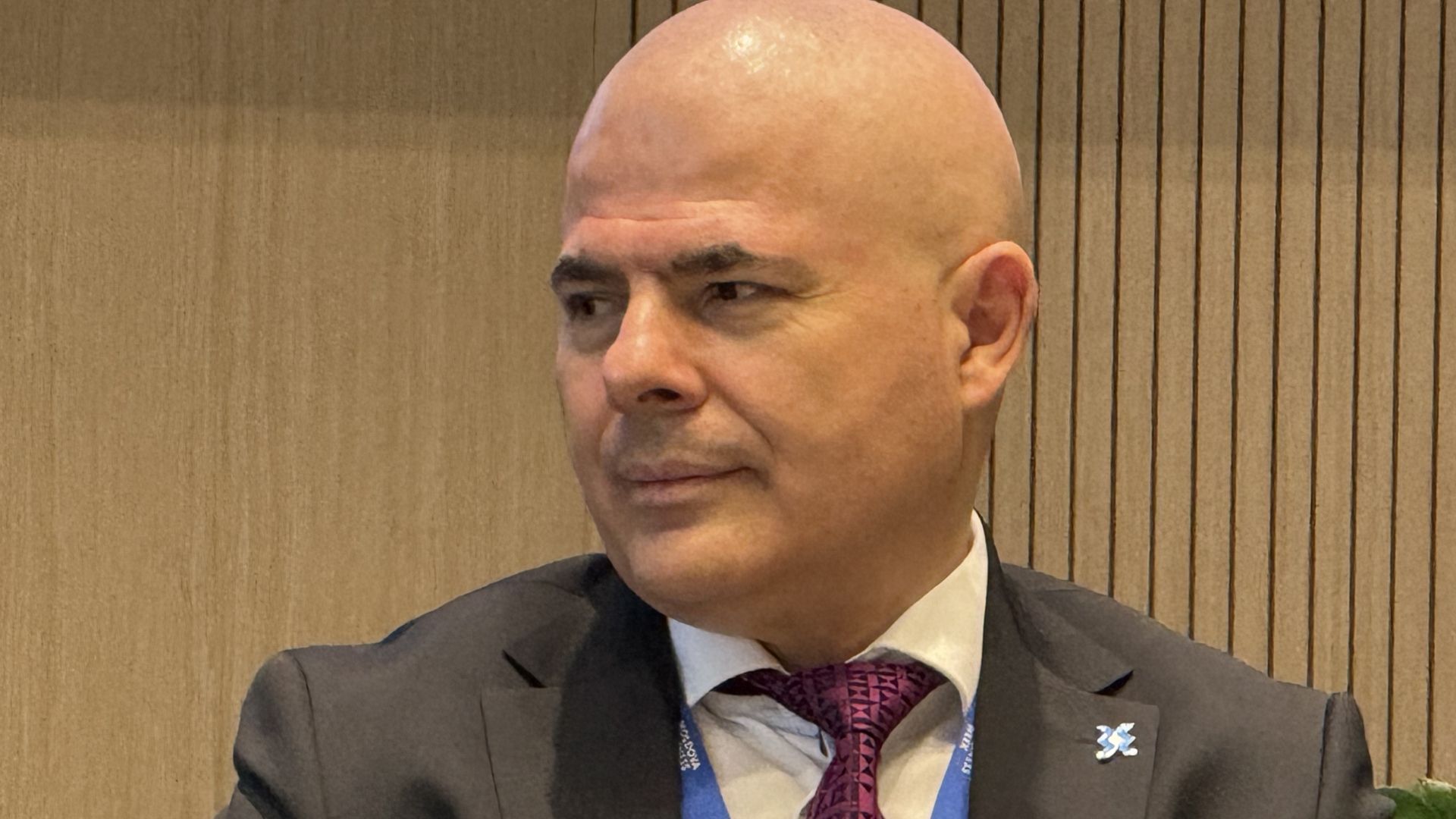
“It's a strategic partnership”, says BVB CEO Remus Vulpescu, who's claim to fame was the turnaround of bankrupt Hidroelectrica, a Romanian utility company that raked a total of €6 billion in profits in the 14 years since.
The BVB holds the largest stake, over a quarter of BIMx stocks, with local government institutions, banks, insurers and utility providers sharing the rest. If the pace keeps up, the hope is that trading might start before the end of this year.
But does Moldova have a deep enough market to warrant it's own stock exchange? Probably not. Even the Stock Exchange in Romania – a country with eight times the population and twenty times the GDP – is deemed barely liquid. But the hope is that it may bring about transparency and accountability to state companies, thus helping push forward the daring development and reform plans and the current push for fast-paced European integration, says newly-appointed minister of economic development Claudiu Năsui.
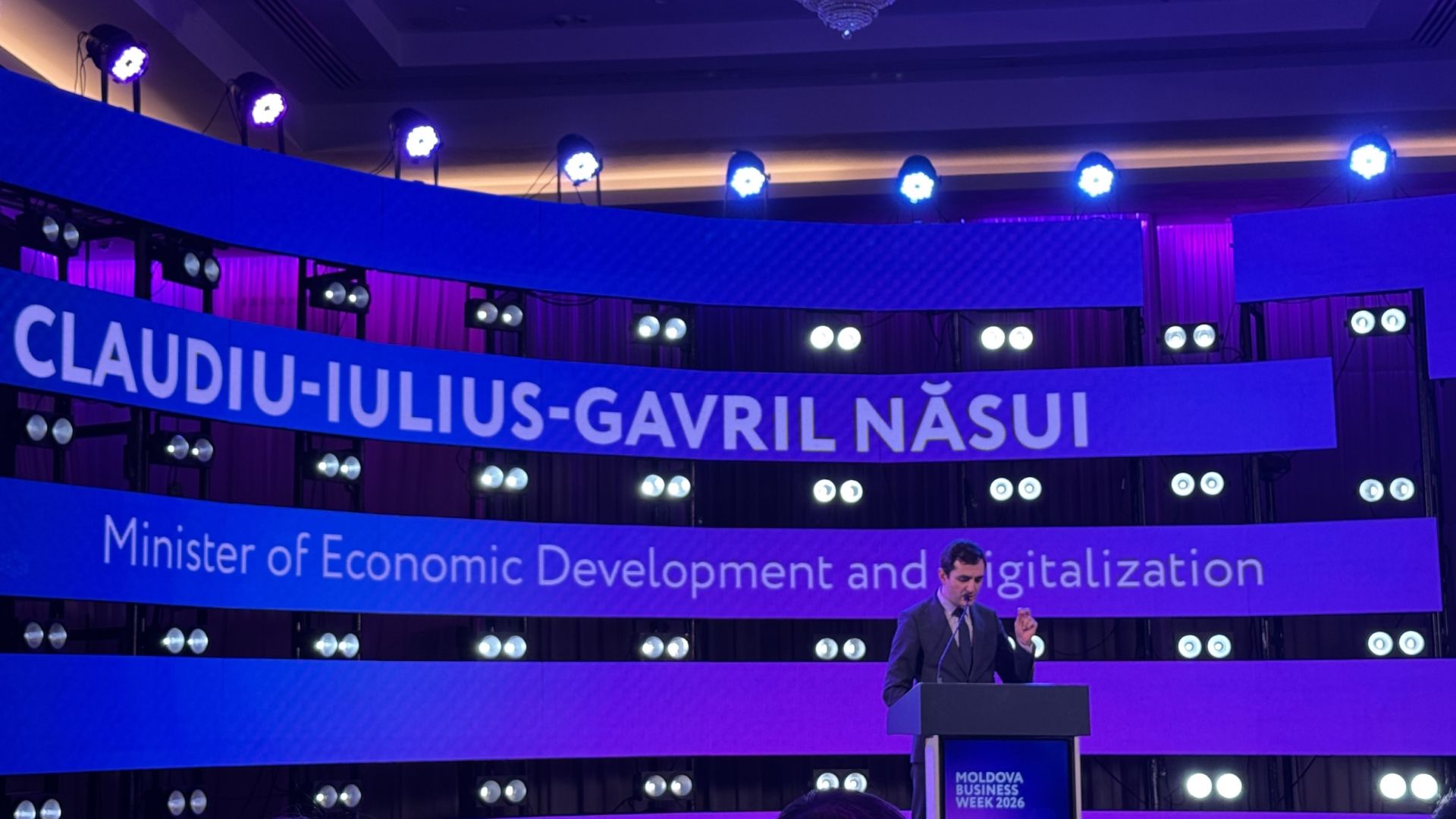
Mr. Năsui, a former minister of Economy in Romania, now holds the equivalent office in Moldova.
But how fast, really?
„Blyat!”, utters my Uber driver as the car – a Prius with worn-down shocks and its speed gauged in miles – smashes our heads against the ceiling. It had just hit one of the countless potholes that welcome visitors just off the Airport, like they did in Romania two decades ago. Ion drives like a clodhopper, speaks Romanian and listens to Bucharest-based radio, but has Waze in Russian, just like his own road-rage. He knows a little about Romanian politics and is a fan of Călin Georgescu, the banned Romanian presidential hopeful: „He's about justice”, Ion quips. No tips for this ride (roughly 15€ to city center) but no rating either – there's nothing yet to compare the experience to.
He may have rated me badly himself, as next morning no driver picked my order back to the airport. I was lucky to catch bus 30, where I got the conductor confused by using phone payment with the newly-installed POS system. He claims he never saw anyone doing it. “They brought these from Romania recently (...) They say it debits the account, but we can't be sure that it did (...) People here don't trust this (...) Why can't things be kept simple?” complains the man while collecting cash from riders. Most pay the full fare of 6 lei (€0,3) and get a ticket back but one or two seem to drop whatever change they can afford to spare, without expecting anything in return, like is the habit in this part of the continent.
Romania and Moldova share language and heritage but history kept them apart with a brief two-decade exception between World Wars. As a Soviet republic, the small republic surely didn't “get everything”, as central planners assigned it the role of a winemaker and fruit basket for Moscow. The 35 years of independence were mostly a struggle to get out of poverty and stay off political crosswinds. With high workforce migration and split trade both to the West and to the East, it was a complicated choice until Russia's invasion of Ukraine made the choice simple: EU or bust.
The tiny tiger
With its back against a wall of literal artillery, Moldova is right now leading a full offensive to draw investment. This reporter went there – on the magazine's full expense – for just the first day of Moldova Business Week, the sort of top-level gatherings that are usually dead-boring fact-wise but hugely useful in feeling the vibe. But for whoever didn't pay attention for the last few years, info may be outright overwhelming.
In just a few short years, wine exports went from main export to a modest 7% while export of services – like software or healthcare – account for almost half. Over 6 million passengers flew to and from Chișinău last year, which is almost as many as in Cluj, Iași and Timișoara, Romania's top 3 airports outside Bucharest. The installed power in renewables almost doubled in less than two years, reaching 1,1 GW, now providing a quarter of all electricity production. On a per capita basis, this is now almost at parity with Romania's 10 GW, with both countries now rushing to make up in battery storage as well, as you can read in another reportage by Standard.
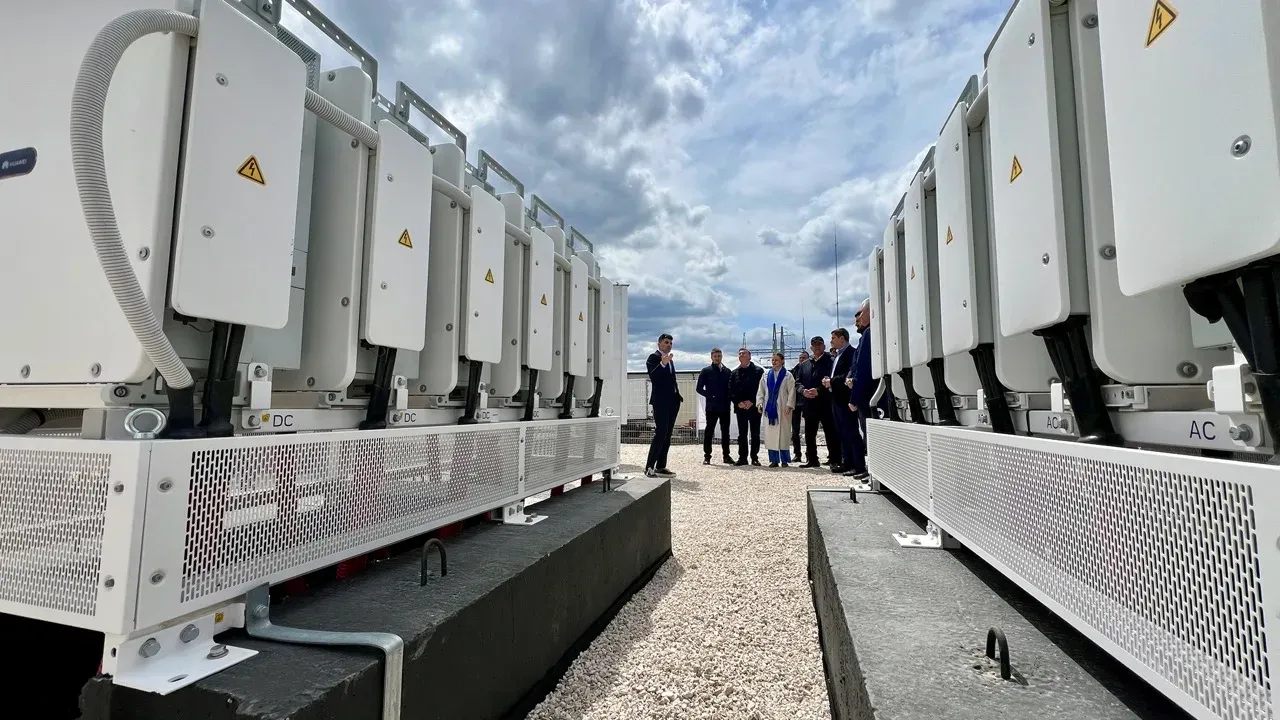
The largest storage project, accounting for a quarter of the country's 240MWh storage capacity, went live this spring in Rădeni.
Moldova's play now is to leverage the non-EU member status in order to have a competitive edge drawing in investment: Tax incentives going as low as zero or very modest taxation, performative cutting of red tape such as being able to register a company fully online, and "industrial parks", with permits and infrastructure readily awaiting. The pitch seems quite convincing „Just look at the passion in [the prime-minister's] eyes, he clearly loves this country”, says one prospective investor who claims he's the only attendee coming in from Denmark among the few hundreds there (he's not, there's at least one other).
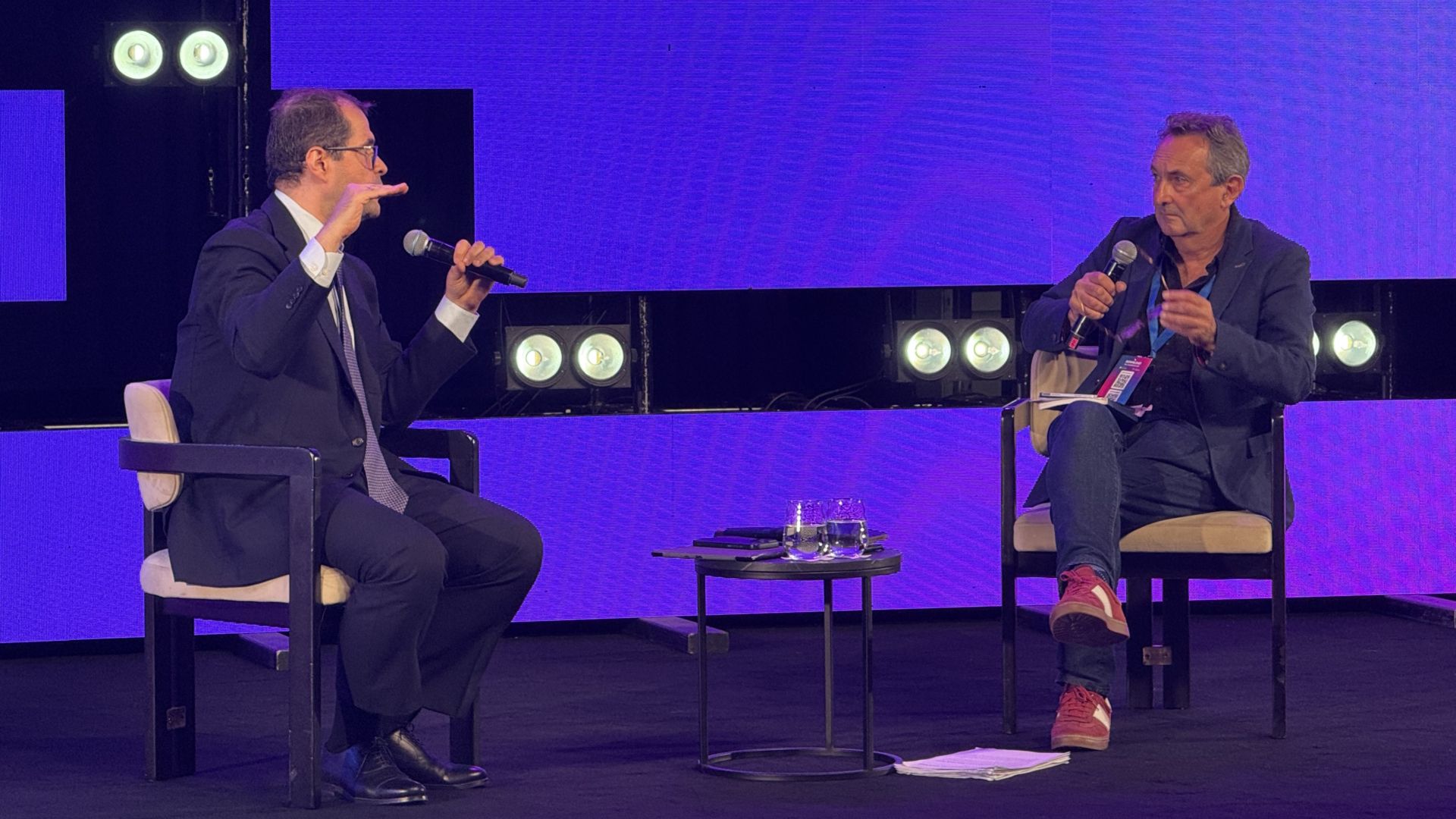
The Dane was reacting to PM Vasile Tofan who sat for a live-audience interview with The Economist journalist Tim Judah. Mr. Tofan took pride recalling how, years ago while working in venture capital, he successfully cajoled The Economist magazine into changing an illustration that was unflattering for Moldovan wine export ambitions.
For someone visiting from Romania, some things are uncannily frustrating. On the one hand, the smaller country openly draws expertise from it's more experienced and richer sibling, to the point where state officials of the highest rank are effectively Romanian expats: like Anca Dragu, who's been serving as Central Bank of Moldova governor for three years already after being a Finance minister and then the president of the Senate (second in the presidential line of succession) in Romania, or like Claudiu Năsui, who just took his office as deputy prime-minister, dealing with digital reforms. On the other hand, the fluency in English for most government officials here ranges from decent to native – add to that the charisma that comes with mastery of each own's trade – in stark contrast to so many top figures back in Bucharest.
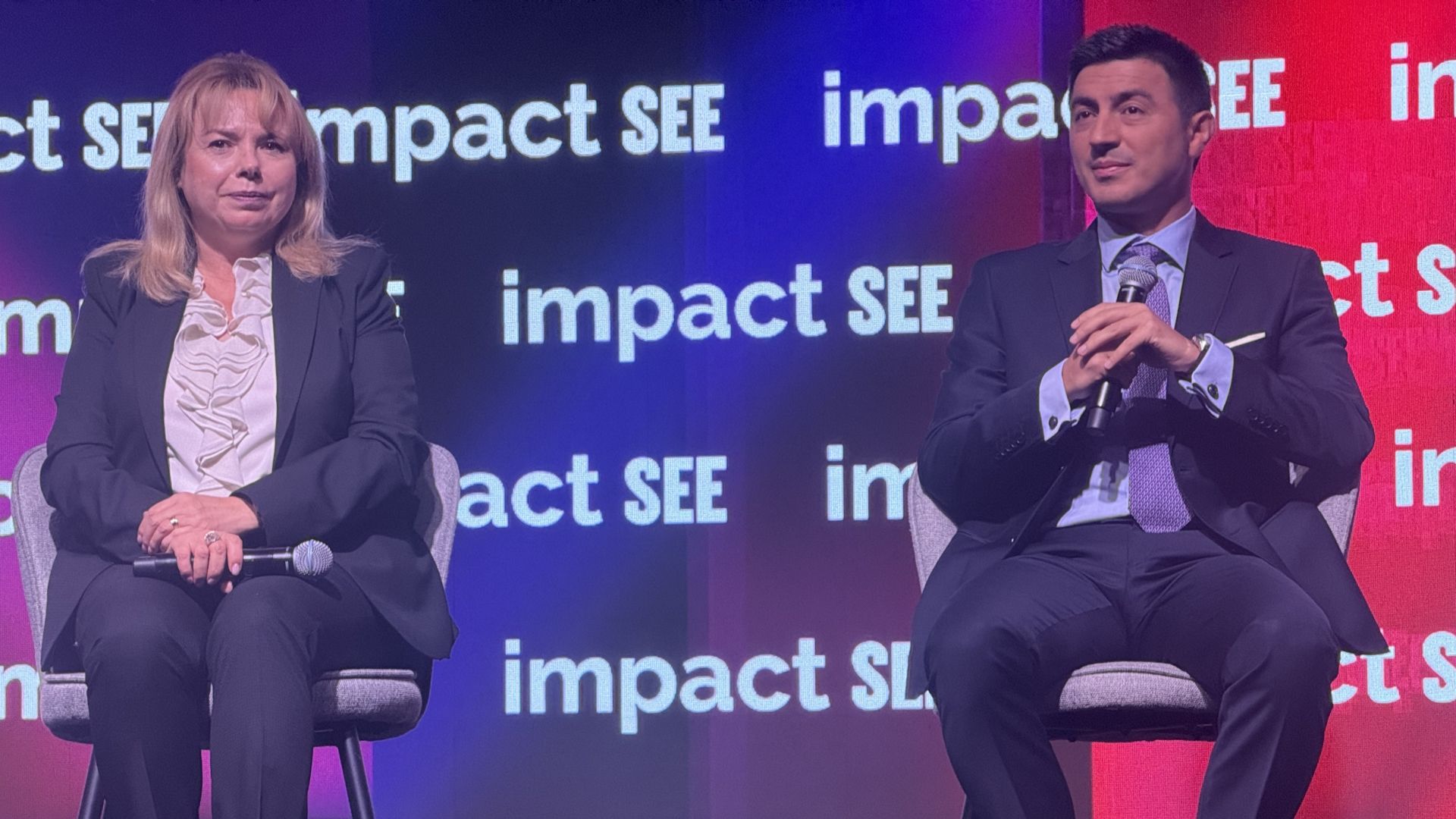
Literally back in Bucharest, one day later, Moldovan Central Bank governor Anca Dragu faces off Albanian Deputy Finance Minister Endrit Yzeiraj, at Impact SEE 2026 – an impressive Polish-led commercial diplomacy endeavour. Just like Moldova, Albania enjoys great momentum pushing towards the EU and reforms, even while a critical mass of ordinary people protest against what they see as destructive development and social injustice. And just like in Moldova, well-spoken charismatic politicians make things seem easy.
It's never that easy, though...
This reporter witnessed the same kind of energy in Georgia, in 2009, where a reform-minded cabinet was trying to make the country into a free-trade and innovation hub. Things went awry when social expectations could not be met and the country went back to a much more ambiguous stance toward Russia. Some of the people we spoke to back then – with all their ivy-leagues or RP English – turned out corrupt, incompetent or simply too idealistic. Georgia's crawl out of poverty was much slower than promised and today, if the country were counted as European, it would win the race to the bottom against Moldova, at just €8.500 per capita.
In Chișinău, right as officials hold their polished speeches, just a few blocks down the road from the fancy convention center, hundreds of people are protesting against the natural gas price-hikes, up another 30% starting this october.
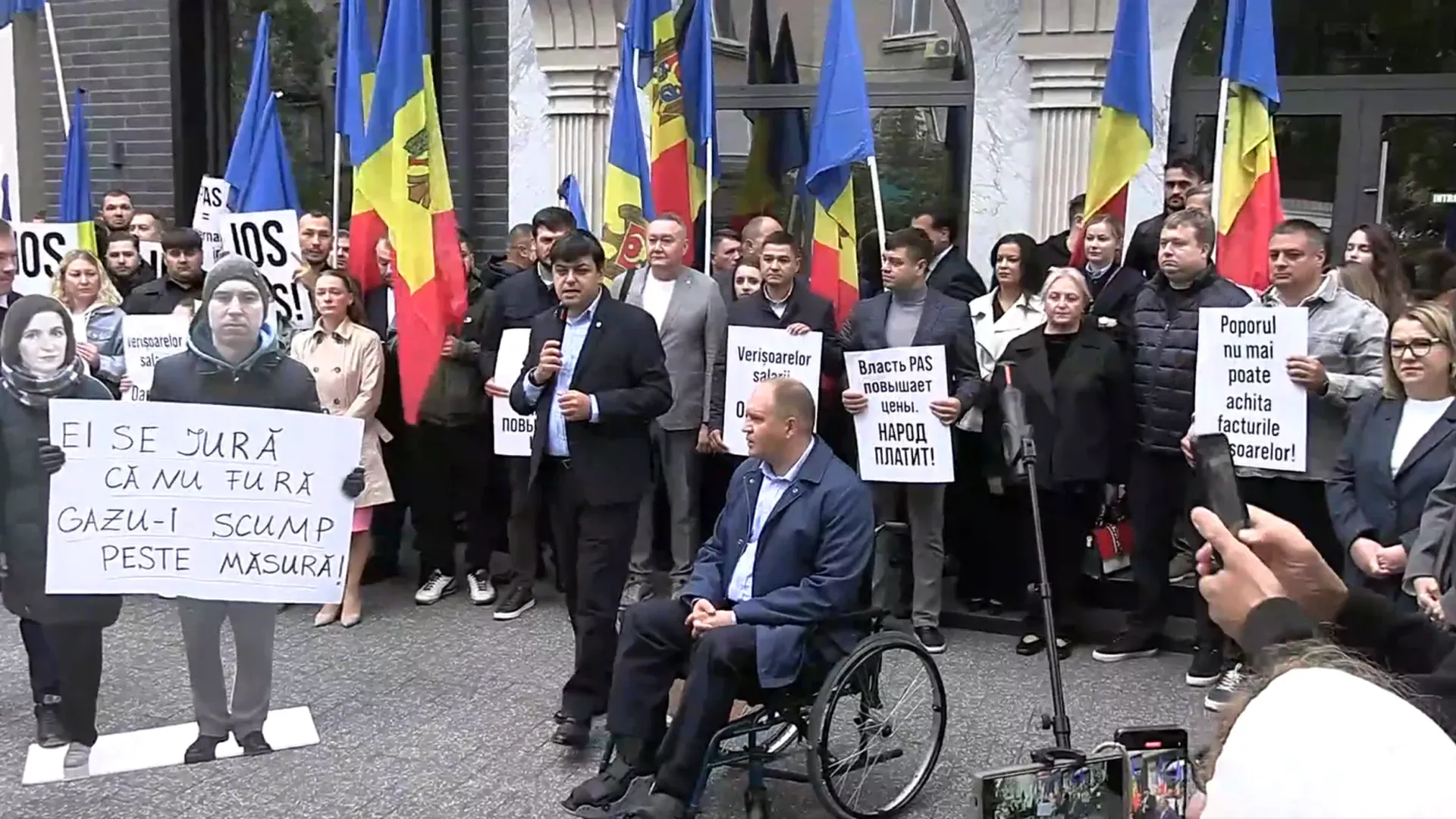
The war in Ukraine cut the cheap Russian supply and Moldova relies heavily on Romania and Ukraine for infrastructure, storage and aid while bringing in expensive gas from EU-approved sources. Moldovan prime-minister Vasile Tofan hopes that the opening of Romania's Neptune Deep next year might just solve the country's problem, but until then the challenge of politically surviving this winter is paramount.
So what's next?
One way or another, Romania is very likely Moldova's gateway to future prosperity and security. One way is the current coordinated push to level things up under the European Union's umbrella. The other – the unceremoniously so-called "Plan B" – is the fabled Romanian reunification that fewer then ever Romanians want (but yet a majority) and more then ever Moldovans want (but still a minority). President Maia Sandu sometimes mentions this scenario, if only as a ruse to increase leverage in accession talks.
An outright reunification would come with huge political and economic costs. The political cost would be borne mostly by the smaller country, that doesn't have full-control over it's whole territory, with pro-russian Transnistria clinging to a provision to outright secede. The economic cost would go to the larger, more developed country. A thorough analysis, put together exactly 20 years ago by one of this magazine's authors for the daily newspaper Cotidianul, put the figure north of €20 billion. Since then, Romania's GDP increased four-fold while that of Moldova jumped six-fold. But debt also rose to the point where any more burden is now simply not an option. Political prospects have now shifted from the realm of public finance to that of private equity, so the better question might now be: Will the "reunification" amount to a cashless merger or to a hostile takeover?