What jobs will physical AI replace first
Rise of the forklifts: Too dumb and they get stuck, too smart and they go crazy
Nailing this tightrope walk might just help AI turn a quicker profit
 Lucian Davidescu
in Bucharest
A quarter of a century ago, a German auto parts manufacturer arrived in Sibiu chasing cheap labor. It made exactly one exception to its cost-cutting mission: a handful of forklift operators were flown in from Germany, complete with home-country salaries, per diems, and the so-called "third world bonus" — a premium once paid to German expats dispatched to work in countries on a particular list. Romania, back then, made the cut.
Why the exception? Because no matter how well-trained and motivated the local hires were, someone always managed to plow a forklift into a wall every so often, wiping out whatever savings the company had banked by relocating in the first place.
Fast forward to today: that German manufacturer is now Chinese-owned, and it's looking to slash headcount, swapping out humans for robots wherever feasible. And the spearhead of this AI-powered automation push is, once again, the humble forklift. Turns out it sits at the perfect intersection of mature technology, scalable market demand, and numbers that actually work on a balance sheet.
Large language models still can't outrun their ballooning training and data-center costs, and humanoid robots remain flashy showpieces with zero practical use for years to come. But the real productivity gains are emerging in the "boring" corner of physical AI — the stuff that shows up on factory floors and construction sites. "Only for specific tasks, though: plastering, painting, mechanized screeding," according to one industry expert we spoke with.
Watch out your feet!
A pallet-on-wheels rolls hesitantly toward visitors' ankles — close enough to grab attention, but not fast enough to actually startle anyone among Romexpo visitors.
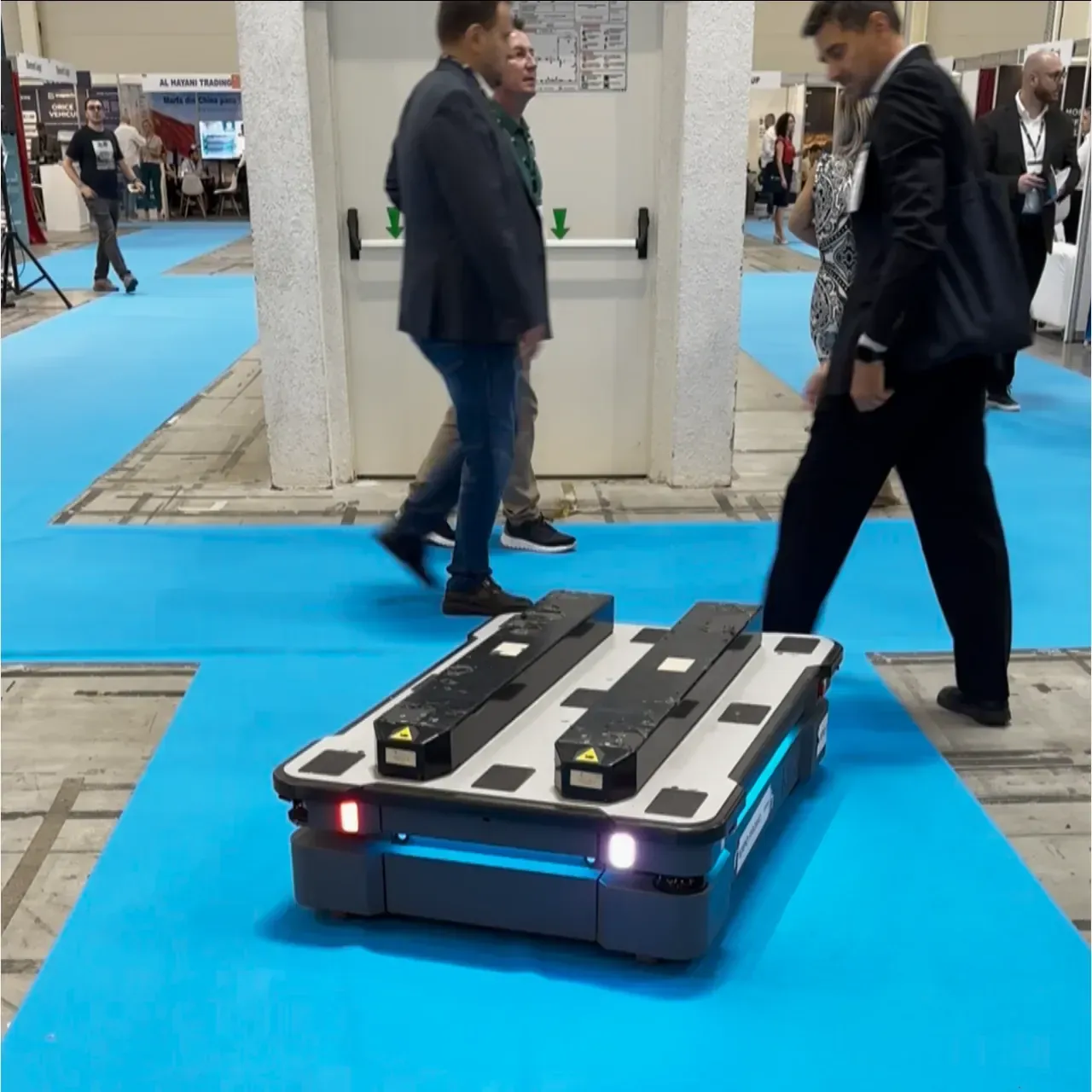
At Translogistica, the annual trade fair for transport equipment, automation stopped being a novelty long ago. But spot a hint that AI is steering the show, and you can't help but wonder: are the robots already walking among us?
Not quite. Someone is always watching like a hawk, finger hovering over the kill switch, ready to hit stop at the first sign of trouble. Even then, the actual braking decision still runs on old-school sensor signals. "Where safety is on the line, we don't leave anything to chance. We iterate through every possible scenario so it never makes a bad call," Răzvan Dima, co-founder of Artsys, a Romanian automation supplier, tells Standard readers.
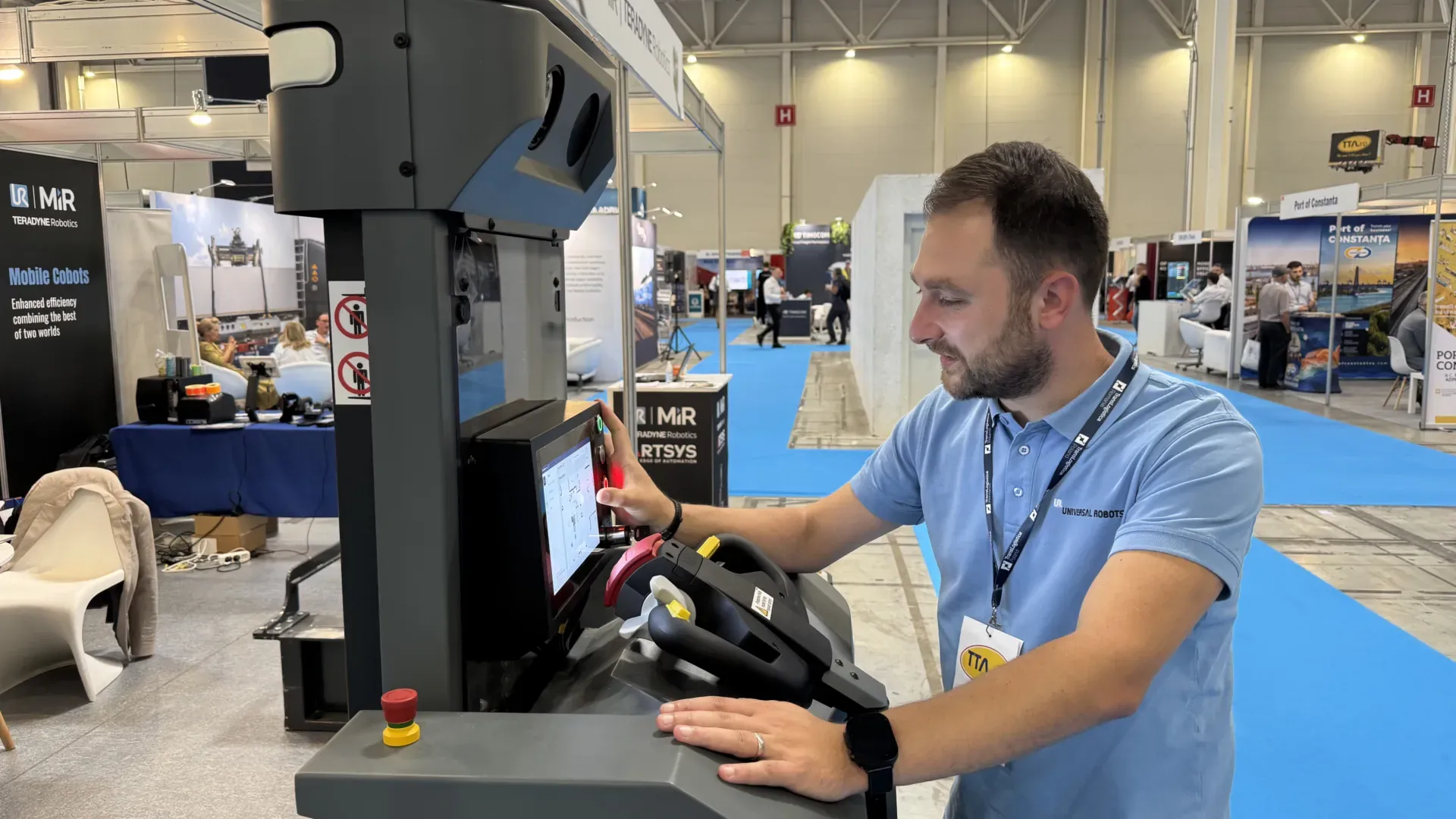
Industrial settings come with strict protocols and accepted occupational risks, but even there, safety measures can get downright draconian — machines confined to caged-off lanes, power cut instantly the moment a worker hops the fence, Mr. Dima adds.
AI's main job here is nailing the final positioning: recognizing the pallet, figuring out which side to lift from — the exact step that used to trip up older systems. Everything else is handled by classic sensors and conventional programming. Striking the right balance between old-school automation and decision-making autonomy is the real trick, especially for certification, which technically runs on a self-regulation model but is, in practice, demanded outright by most buyers.
The numbers
The small platform runs €50,000, a heavy-duty forklift tops out around €100,000, and an industrial robotic arm comes in at €20,000, says Dima, noting his company has sold 30 units in the two years since launching.
Forcelift, another player with a forklift currently going through certification, is eyeing similarly steep price tags — somewhere between €100,000 and €150,000 depending on the configuration, says general manager Ștefan Ciobanu.
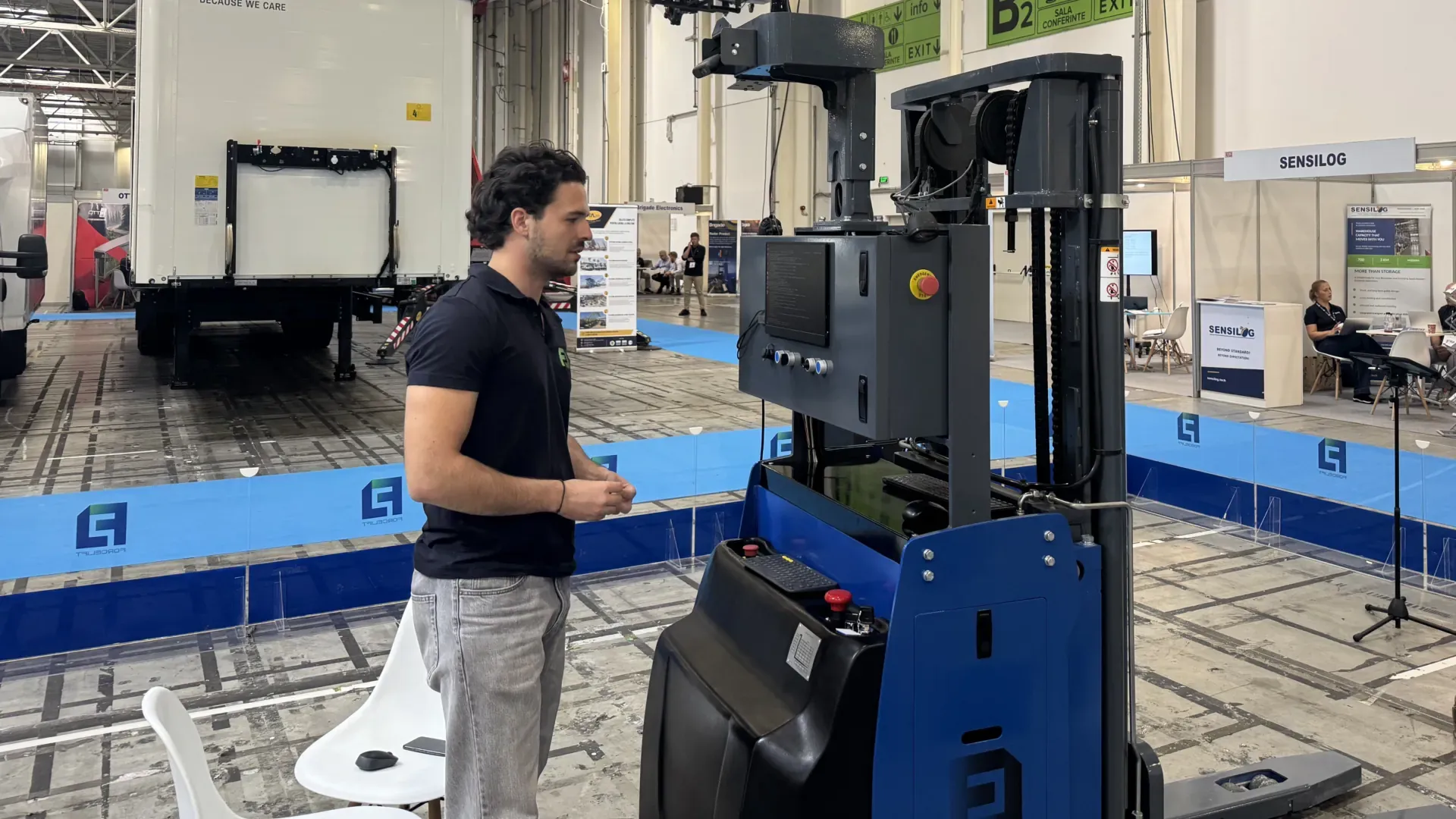
That's up to ten times pricier than a standard operator-driven machine. But a forklift operator costs a company between €20,000 and €25,000 a year, and if one automated unit can cover two shifts, suppliers promise a payback window of just three to four years — even factoring in one human supervisor for every five machines.
Which lays bare the real business puzzle: sell enough units to recoup the R&D and certification bill, but also seize the upside — a product with fat margins in a market with nowhere to go but up.
Not quite there yet
Except, of course, nothing is ever quite that simple. Just a few booths down, Chinese competitors have already shown up — for now, only with conventional equipment. HELI, one of the world's largest forklift manufacturers with roughly 2,000 engineers on staff alone, already has automated solutions in its lineup and is ready to ship them to Romania the moment demand justifies it.
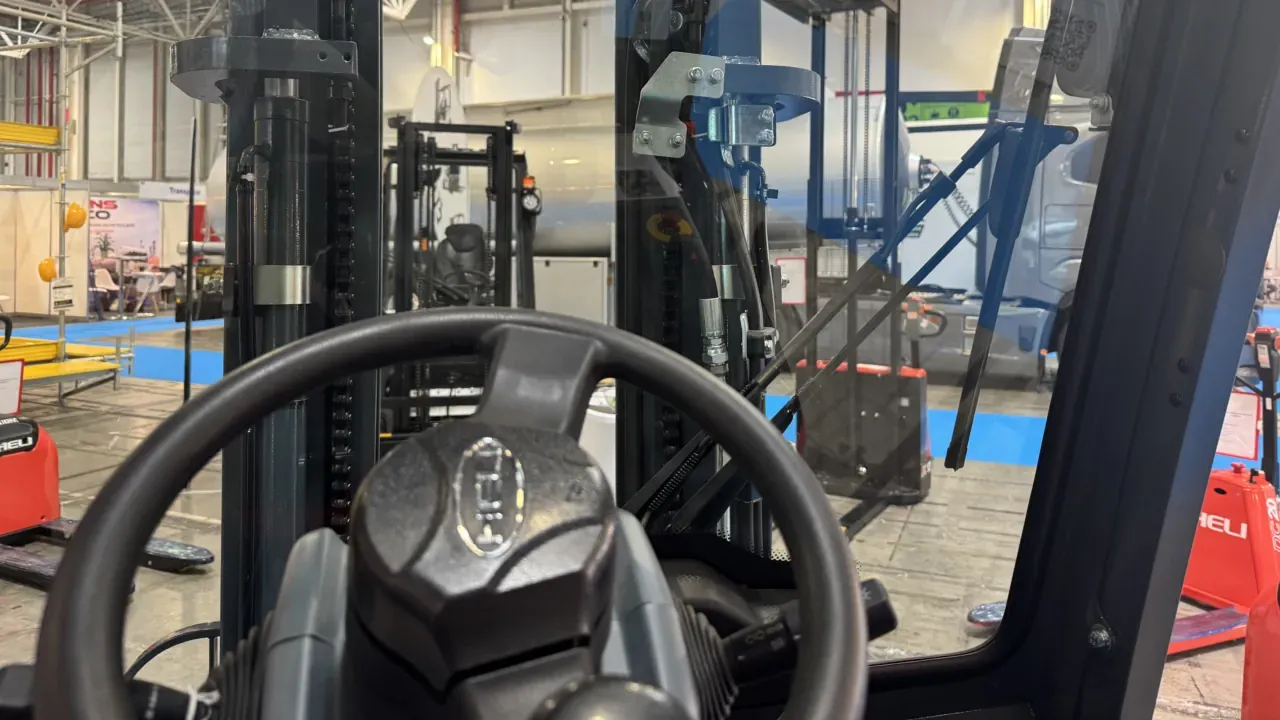
”Sure, the robot works round the clock and never asks for a smoke break. Still, buyers are rather hesitant”, says Simona Grigorescu, sales director for the company's Romanian branch. Take the battery-powered option: it costs just €4,000 more than the diesel version, a gap that pays for itself in a year and a half — yet some customers still balk at making the switch, Ms. Grigorescu notes.
Why the hesitation with autmation? Here's from Steluța Creangă, the logistics director at Efes Moldova, at another conference in Bucharest – Supply Chain & Logistics Forum: "Before we get there, the AI also needs to be adapted, but the warehouses also need to meet certain criteria. For example, we have an old factory that was renovated, it is a barrier for us."

Otherwise, the need really exists: "The most difficult position to fill [in Chișinău] is that of a forklift operator. Anything else can still be found," Ms. Creangă recounts.
A study from the University of Brașov on AI's impact on the forklift industry projects that by the end of the decade, productivity will climb 40%, demand for low-skilled labor will shrink by 20%, operational efficiency will rise 25%, and procurement costs will drop by 15%.