What are the effects of the Ploiești-Brașov highway delay
Europe's slowest road just blew €100 mil. to push the bottleneck next town
The Comarnic bypass moved the choke point to Sinaia and that's where it will stay for another two years
 Doru Cireașă
in Ploiesti
A cyclist setting off at an easy pace from Ploiesti toward Brasov often stands a decent chance – weaving through gridlocked traffic – of beating a driver attempting the very same route. With journey times sometimes stretching to 6-7 hours to cover a mere 107 kilometers, this is arguably the slowest stretch of road connecting two cities of this size anywhere in Europe.
More than half of that distance is handled by a single, two-lane road forced to absorb local, county, and national traffic all at once. Add a steady stream of weekend tourists piling into the mix, and the result is endless gridlock, while heavy trucks are restricted or rerouted onto an already congested high-altitude road – turning any logistics calculation into an absolute nightmare.
Ploiesti is home to 180,000 people, Brasov to 240,000, and both are top-tier logistics and industrial hubs – yet a truck leaving Ploiesti will reach the port of Constanta faster than it reaches the neighboring city just over the mountain. The absence of this link – and, for now, of any motorway crossing the Carpathians at all – means southern and eastern Romania remain far more cut off from the rest of Europe than the map would suggest.
But the fallout spills over onto both sides of the mountains. Take the fact that the country's entire refining capacity sits in the south, with two of the nation's three refineries located right in Ploiesti: the clunky distribution of fuel to Transylvania amounts to a standing strategic vulnerability.
This mess is the product of decades of dithering and policy failures that let infrastructure fall hopelessly behind the country's booming economic growth. Only now has a motorway project reached the stage of on-the-ground surveys, and even the most optimistic completion target is five years and €5 billion away. Funnily enough, five years was also the estimate two decades ago, back when the first attempt at this project collapsed.
The stopgap solution amounts to trench warfare: pouring disproportionate costs and effort into building yet more two-lane roads to shoulder some of the burden. €100 million was just spent on 6 kilometers of single-lane road – a price tag that, in another era, would have bought a full-blown motorway. So far, with limited success: the cyclist who used to catch up with you in Comarnic now catches up just a few kilometers further, in Sinaia.
The reality on the ground
One hour to cover 22 kilometers between Sinaia and Predeal. That's how long it took drivers on the first Saturday of October to travel between the two resort towns – just two days after the much-hyped Comarnic bypass opened. "Traffic around Comarnic was light, probably thanks to the bypass, but it backed up badly entering Sinaia, with the jam stretching all the way to Predeal. It took me at least an hour to get from Sinaia to Predeal," one driver told Standard, sending along photos as proof.
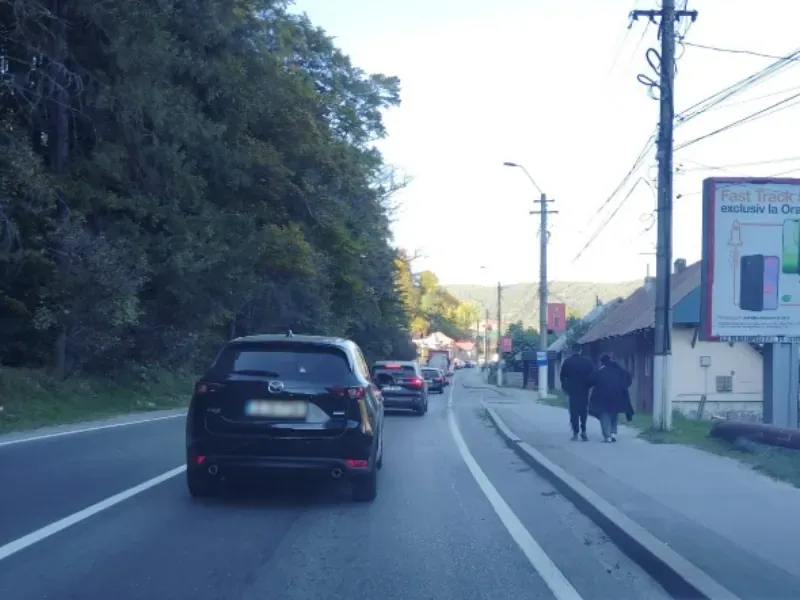
For anyone who's driven through Comarnic and remembers the permanent traffic police detail, the pedestrian crossings, or the cars pulling straight off the DN1 into roadside supermarkets, this comes as a surprise. The expectation was that once that bottleneck was fixed, things would finally flow smoothly along the Prahova Valley.
In reality, the Comarnic bypass addressed just one of at least two trouble spots on the DN1. Fix one, and the other remains: the Busteni-Azuga stretch, not to mention Sinaia, which technically has some kind of "bypass" of its own. Travel time along the Prahova Valley is dictated by its weakest link. Eliminate one bottleneck, and the next one simply takes its place. Drivers have felt this firsthand ever since the Comarnic bypass opened.
What's more, bypasses don't actually reduce overall traffic outside the area where' they'e built. Measured in Annual Average Daily Traffic (AADT), the volume between the points they connect stays the same. The only real improvement is that splitting traffic across two routes locally bumps up speed in that specific stretch. But overall travel speed only improves once the next bottleneck is also removed. Clearing one choke point simply dumps more pressure onto the next – exactly what's happening on the DN1 right now. Without a parallel motorway, AADT has no way to drop, since the number of people traveling from origin to destination stays constant regardless.
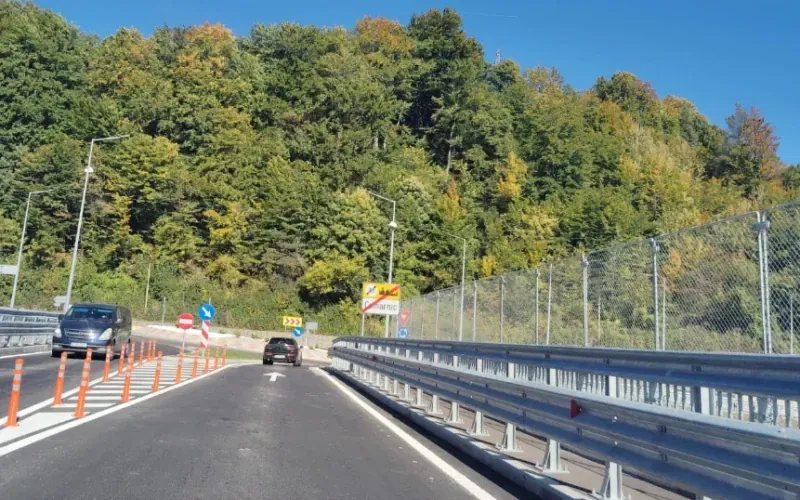
The Comarnic bypass opened to traffic in early October, nearly three years after construction began. The project cost 516 million lei – around €100 million. For a total of almost 6 kilometers, the works include complex infrastructure such as bridges and a roughly 380-meter overpass spanning the Prahova River and the Ploiesti-Brasov rail line.
The expert's take
The Comarnic bypass is just a first step toward untangling the current gridlock, Florin Goruneanu, director of consulting firm Irimat Cons – which carried out the feasibility study for the work – told Standard. "The Busteni-Azuga stretch also needs to be finished for the traffic flow to make sense... We're counting on having two parallel traffic routes running alongside the existing roads," he added.
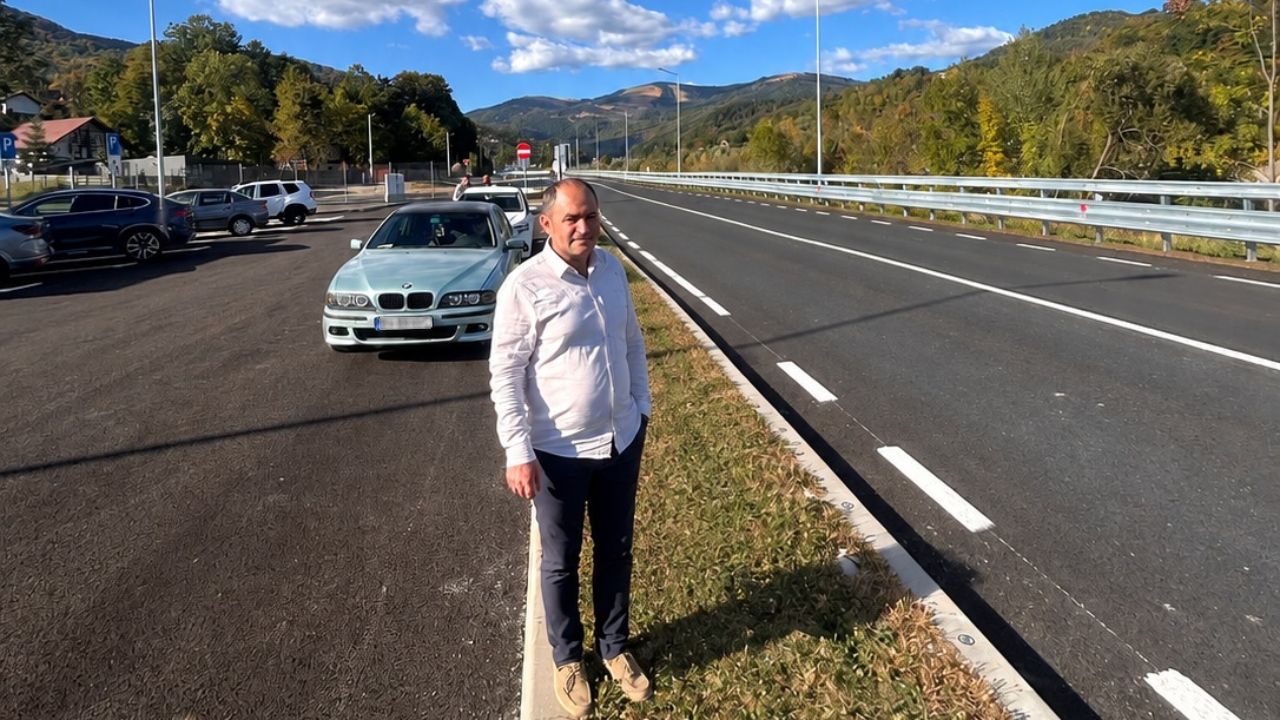
"Thanks to these two alternatives plus the national road, traffic will split up – that's what the traffic studies show." Asked whether Romania still needs a motorway, Goruneanu was unequivocal: "We need a motorway – that's the only way we believe we'll get rid of those brutal traffic jams we've had until now. Right now, there are jams pretty much every day, until the Sinaia Nord and South overpasses and the Azuga-Bușteni bybass including the Azuga overpass will be finished", he says.
Two more years to go
The root of today's trouble is the poor synchronization of calendars. Work on the Azuga-Busteni bypass has reached 16% completion, along a 9.4-kilometer route that includes no fewer than 19 complex structures. Contractor representatives outlined the main challenges on site and the work scheduled through the end of the year. The project is being carried out by a consortium led by Romanian builder Coni SRL, based in Prahova, alongside firms Gott Strasse, Perfect Consult Europe, and Automagistral Pivden. Completion is projected for September 2028.
In a statement to Observatorul Prahovean, Prahova-based contractor CONI said that current work includes earthworks, foundations, and infrastructure for bridges and viaducts, retaining walls, riverbank reinforcements, and utility relocation. The new bypass, which is expected to absorb part of the through-traffic, should ease congestion in Busteni and Azuga, where the DN1 currently cuts straight through the town centers. CONI representatives caution that the project won't fully solve the Prahova Valley's traffic problems – but it will mark a significant step in that direction.