Where will Bucharest get its power in crisis
Romanian Capital city got itself surrounded by a new ring of batteries
Solar panels and storage worth two billion euro are replacing the old gas plants
 Mihai Nicuț
in Bucharest
Mammoth solar farms are rising one after another just outside Bucharest, and the records keep tumbling right along with them. 600 MW of installed capacity are already operational, and another 2,000 MW are in the planning stage. If all plans are successfully implemented, annual production is expected to reach 3.5 TWh, which is about two-thirds of the output of a Cernavodă reactor, assuming it is not halted by drought. Another 1,700 MW will consist of battery storage, which ensures a better balanced distribution throughout the day. The project would boast a total market value of around 2 billion euros. An area of at least 3000 hectares will be covered, the size of the smallest of Bucharest's six districts.
Proximity to the Capital is of strategic importance, as this is the most energy-"thirsty" region in Romania. Long-distance transport entails costs and risks, which need to be hedged following the capacity reduction of the city's fossil fuel power plants. The ring of newly opened parks serves – more or less symbolically – as a modern replacement for the abandoned ring of 19th century military forts and batteries, ready this time for the hybrid wars of modern times.
Zoom in at ground level
On a blazing hot day in mid-September, 20 km from the edge of Bucharest, a gravel road branching off the highway toward Alexandria suddenly turned into a traffic jam: convoys of cars and buses ferrying officials, investors, engineers and journalists cut across gently rolling terrain that gleamed in the sun — not from any fleet of tractors or combines, but from hundreds of thousands of solar panels blanketing the ground.
The destination: Romania's largest photovoltaic park, officially inaugurated at Iepurești, Giurgiu County. At 169 MW, it's the biggest solar capacity now up and running anywhere in the country.
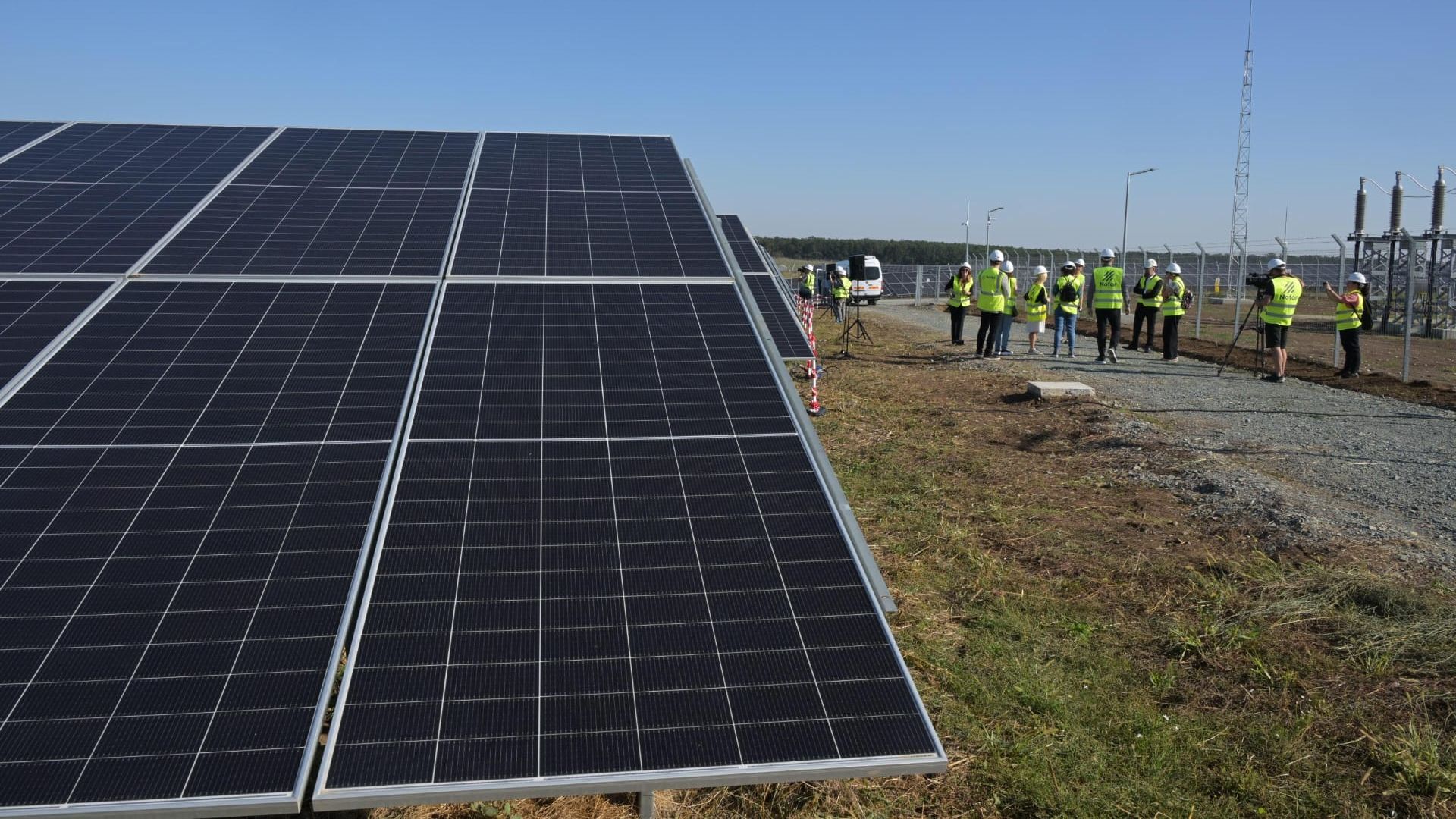
The developer is Israeli firm Nofar Energy, which builds, owns and operates solar and energy storage projects across 10 countries — and Romania is, at least for now, its top market abroad. Alongside Iepurești, Nofar also officially switched on another sprawling solar farm nearby, in the Giurgiu village of Ghimpați — 140 MW.
That's 315 MW brought online in one go, by a single investor. Estimated annual output: 430 GWh of green electricity — enough to cover the yearly needs of more than 250,000 households.
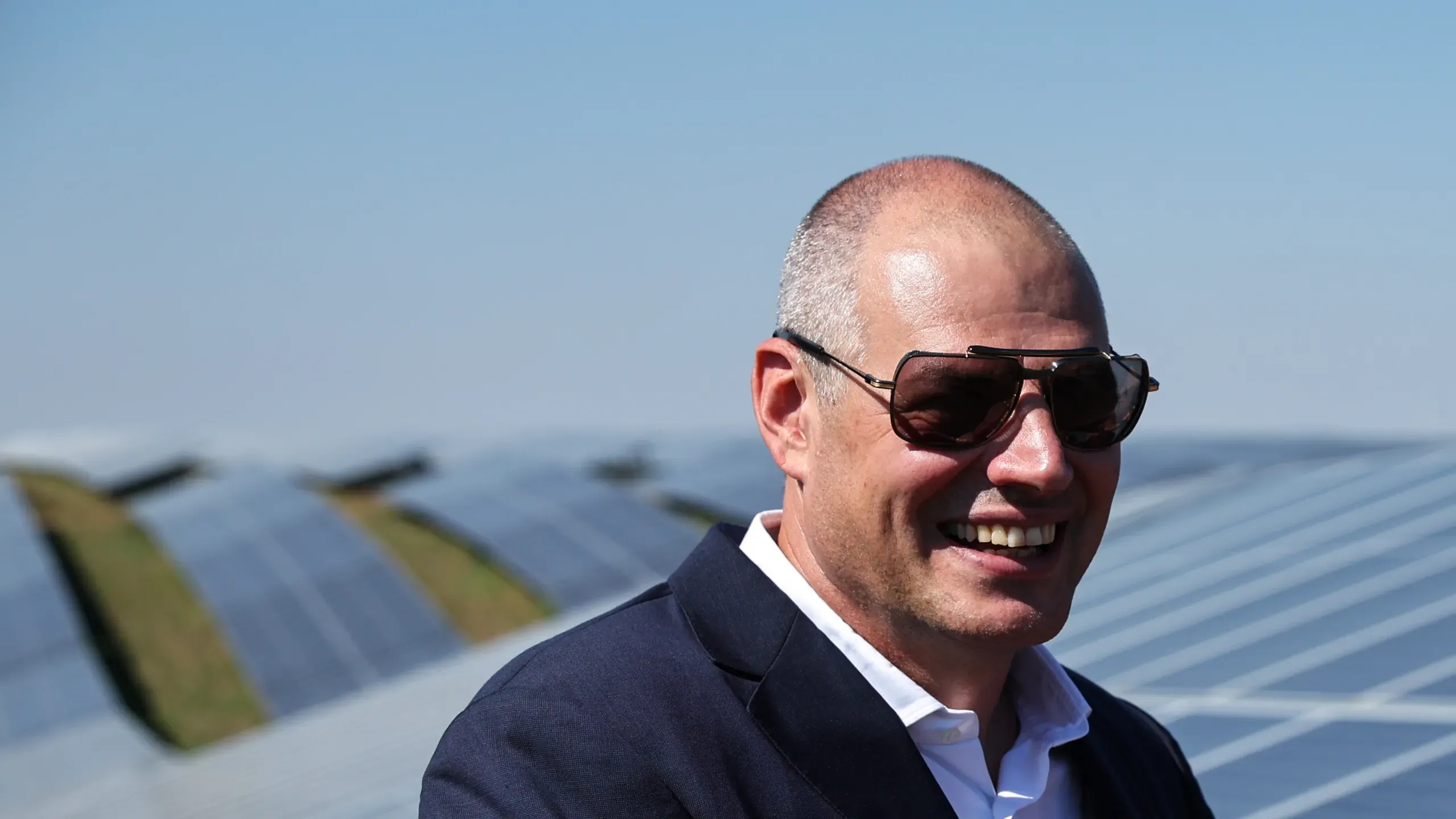
"I believe that if the country manages to bring several gigawatts online over the next few years, Romania's energy landscape will look completely different by 2030. And we intend to be part of that transformation," said Favi Stelian, Managing Partner of Nofar Energy Romania. "Romania is a central pillar of our European strategy, providing a solid foundation for the region's green transition and energy independence. We'll keep investing heavily in both renewable generation and storage solutions, accelerating the country's transformation into a genuine regional hub for clean energy," said Ofer Yannay, Founder and Chairman of Nofar Energy, who also attended the event.
Construction took two years, and in just over a year, these parks will be joined by a massive storage system – 280 MW / 860 MWh – with the battery containers already on their way. That capacity will allow energy produced during the day, when it's abundant and cheap, to be stored and released in the evening, when demand — and prices — spike. It's a win-win: money made, flexibility gained.
Largest, but not the only one
Iepurești is no outlier. The solar boom powering Romania's second renewables wave is turning the western outskirts of Bucharest into a sprawling renewable power plant — one that makes the capital's current fleet of four gas-fired power stations look modest by comparison.
Nofar also has the Corbii Mari project underway in Dâmbovița County, even bigger at 218 MW, with 434 MWh of storage capacity. Alongside it, the Slobozia project and phase two of Iepurești are also in the works — another 531 MW combined. The EBRD has already confirmed the funding, and construction has begun.
Also in Giurgiu County, Austria's Enery broke ground this spring on a giant hybrid plant: 761 MW paired with 1,000 MWh of battery storage, in Ogrezeni. Peak power is higher than that of a Cernavodă reactor (700 MW), but solar energy has a much lower capacity factor, meaning that annual production will be only a fifth to a fourth of that of a nuclear unit.
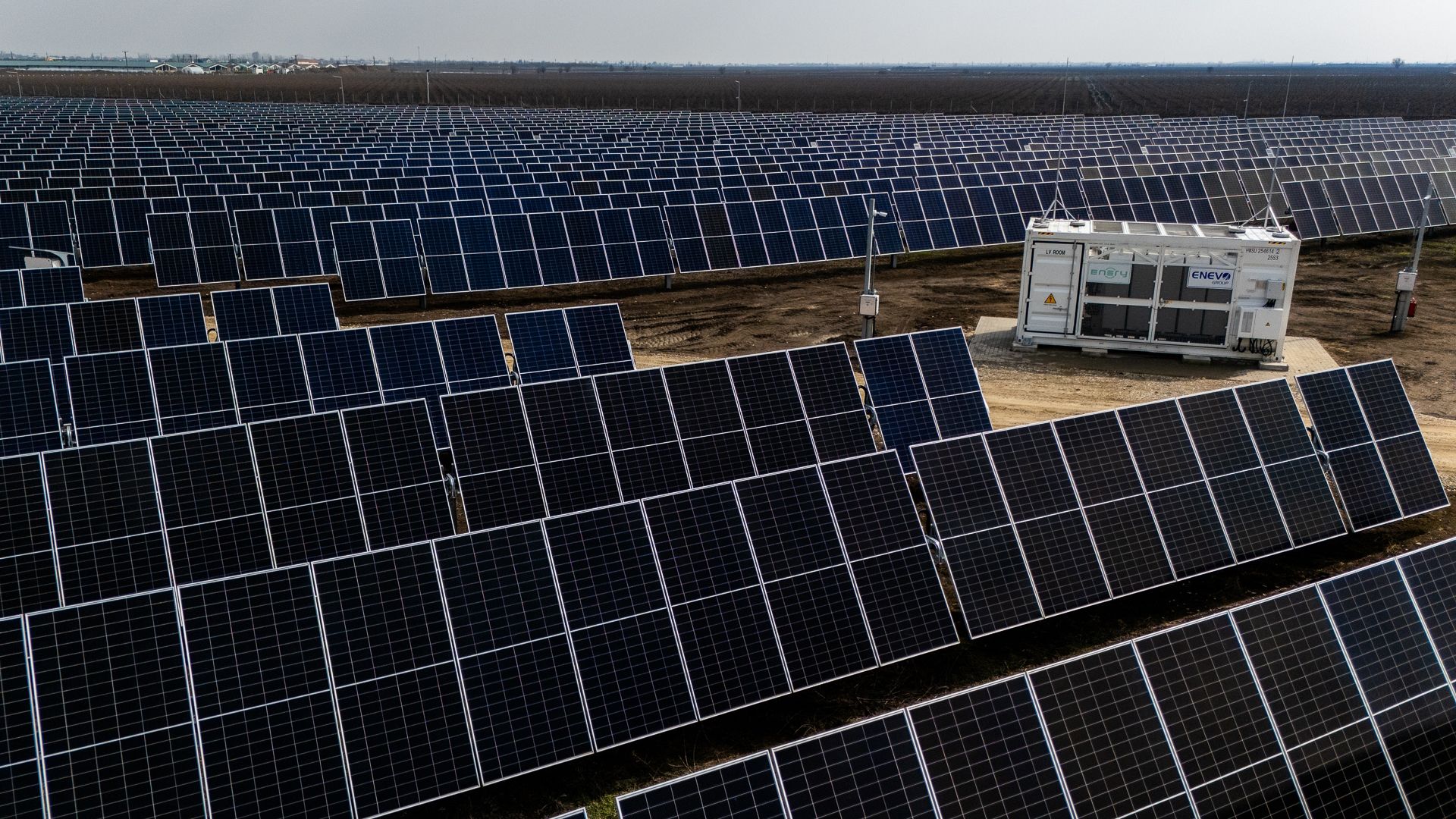
1.2 million solar panels, wired to 1,700 inverters, mounted on 13,000 tracker structures — the system that tilts the panels to follow the sun's path across the sky for maximum efficiency — plus 80 transformer stations scattered across the site. Estimated output: around 1.5 TWh a year, enough for roughly 684,000 households.
"This is a flagship project. By next autumn, the planned completion date, it will be the largest hybrid project in the country — and we believe in Europe too. There's still a bit of competition at the European level, but we're confident we'll come out on top," Liviu Gavrilă, Enery Romania's country manager, told us as he invited us to the site's groundbreaking ceremony.
A bit further out, in the Teleorman village of Băbăița (24 km north of Alexandria), another mega-project is taking shape. Code-named "Helios," it's a cluster of four solar parks totaling 710 MW, acquired by OMV Petrom from Danish developer Jantzen Renewables. All permits are secured, and the project is now moving into the construction contracting phase.
And further still — though still under 90 km from Bucharest — in Rătești, Argeș County, right next to the A1 motorway heading toward Pitești, the 155 MW Rătești solar park, built by Israel's Econergy, has already been up and running for two years.
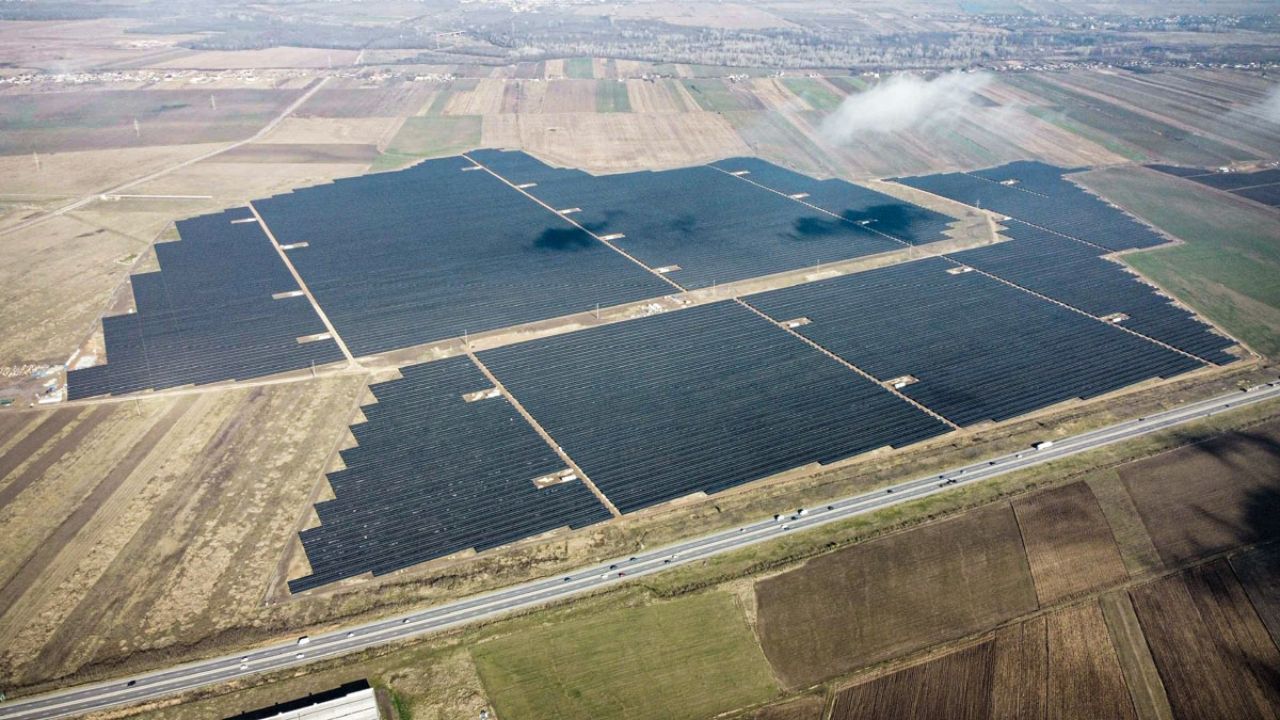
Until this summer, it held the title of Romania's largest solar park. Designed back when storage wasn't yet such a pressing need, it's now getting batteries retrofitted too.
Closer in, at Călugăreni in Giurgiu County, Greece's PPC inaugurated a 130 MW solar plant last autumn. With 227,240 bifacial solar panels, it's expected to produce 193 GWh annually, enough to meet the energy needs of more than 48,500 households.
"We remain committed to the Group's strategy of becoming a leading energy player across the wider Southeast European region. This new solar park in Romania confirms our dominant position in the Romanian renewable energy market," said Konstantinos Mavros, head of PPC Renewables, at the time.
The projects listed above cover only the large-scale solar plants — at least 100 MW each — set to reshape the landscape of the country's highest energy-consuming region, once they're all fully operational. The Bucharest-Ilfov area alone soaks up as much as a quarter of Romania's total power consumption.
Where does it all lead?
Industry representatives say Romania is on track to hit its EU-mandated 2030 target well ahead of schedule — and installations show no signs of slowing down.
"We're building. Solar was the backbone that kept the lights on this summer. We saw that, during the daytime, more than 60% of power came from photovoltaic energy," said Irene Mihai, Policy Director at the Romanian Photovoltaic Industry Association (RPIA), in a recent statement.
"According to our projections, by early 2027 we should surpass the target [set in the National Integrated Energy and Climate Plan], 10 GW of installed solar capacity. We're at roughly 9.1 GW right now, I'd say. So things are moving very fast on our end. We expect to reach somewhere around 11 GW by the end of the year — there are large and very large projects under construction that are set to be completed. So the market is consolidating and is poised for much more growth. We expect to see growth through 2030, at which point we'll likely hit a plateau and eventually see a decline," Irene Mihai said.
According to the latest data from ANRE, Romania's energy regulator, installed solar capacity currently stands at around 4,400 MW that's fully licensed — plus additional parks currently undergoing testing or that have completed testing and are awaiting commercial operation licenses from ANRE. On top of that, prosumers account for roughly another 4,100 MW installed.